
Views: 0 Author: Site Editor Publish Time: 2026-08-14 Origin: Site


In high-temperature manufacturing processes like die casting, extrusion, and forging, tooling failure acts as an exponential cost multiplier. Every halted press stroke bleeds revenue and delays downstream assembly. Premature heat checking, plastic deformation, or catastrophic cracking directly impacts your production quotas and overall profitability. Selecting a hot work tool steel is not about finding the "best" metal available. Rather, you must identify the correct metallurgical trade-off between red hardness, toughness, and thermal fatigue resistance for your specific operational environment.
By matching the alloy to your precise thermal and mechanical loads, you can mitigate unexpected downtime and extend die life significantly. This guide breaks down the primary categories, standard grades, and objective evaluation criteria you need. We explore how to specify the exact tool steel required to maintain bottom-line reliability under the most extreme manufacturing conditions.
Hot work tool steels are divided into three primary categories based on alloying elements: Chromium (versatile), Tungsten (extreme heat), and Molybdenum (niche high-temp).
H13 remains the industry baseline for die casting and extrusion due to its balanced thermal fatigue resistance.
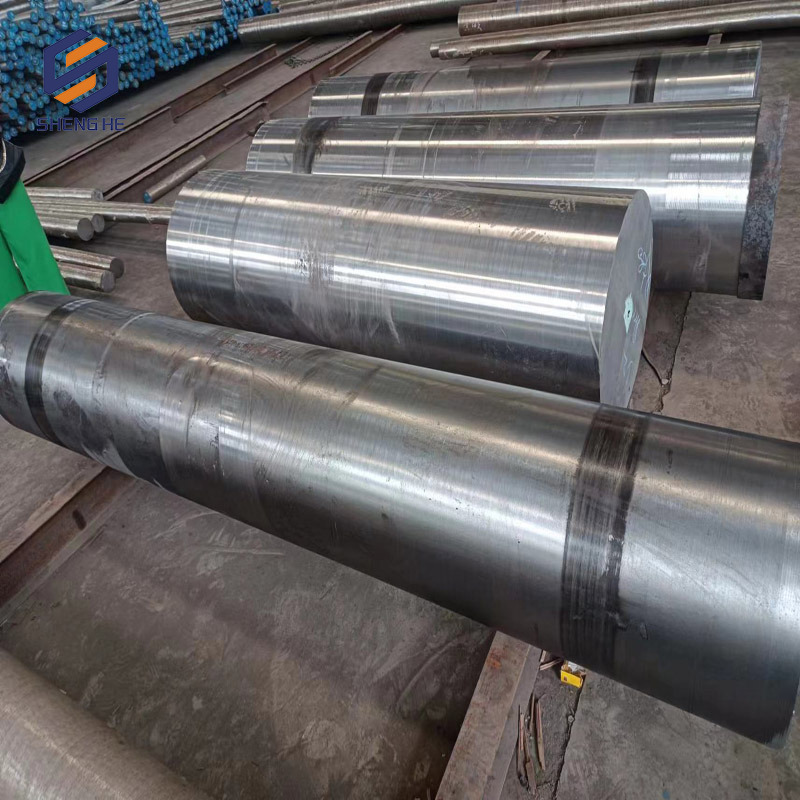
Specialty grades like 1.2714 Hot Work Tool Steel are mandatory for applications requiring high impact toughness, such as drop forging dies.
Grade selection must be paired with strict heat treatment and surface engineering (e.g., nitriding) protocols to realize expected tool life.
Manufacturing executives often underestimate how deeply die material choices affect financial health. When a hot work die fails prematurely, the consequences cascade through the entire production facility. You must evaluate these materials based on their direct impact on operational continuity.
Suboptimal tool steel directly drives up the Cost of Poor Quality. When tooling degrades faster than projected, you face sudden and unplanned press downtime. Every hour an extrusion press or die casting machine sits idle costs thousands of dollars. Furthermore, as die surfaces wear down, they produce out-of-tolerance or rejected parts. Finally, replacement tooling costs consume significant capital. Specifying the correct grade upfront eliminates these repetitive financial drains.
The primary enemy of hot work tooling is "heat checking." This phenomenon occurs as the die surface undergoes rapid heating from molten metal, followed by rapid cooling from lubricants and coolants. These extreme temperature swings force the metal to expand and contract aggressively. Over time, this alternating thermal stress exceeds the yield strength of the steel's surface. Fine microscopic cracks form and eventually link together, ruining the die surface. Controlling heat checking requires a precise balance of ductility and thermal conductivity.
A successful tool steel specification delivers measurable operational outcomes. When auditing a new tooling setup, you should look for three specific indicators:
Predictable tool life: The die must reliably produce a baseline number of shots or strokes before requiring maintenance.
Dimensional stability at operating temperatures: The steel must not warp, swell, or plastically deform when exposed to continuous heat.
Acceptable machinability and weldability: Toolmakers must be able to mill the initial shape efficiently and weld repairs during the die's lifecycle.
Metallurgists classify hot work tool steels into three main groups based on their primary alloying elements. Each element alters how the steel behaves under extreme heat and heavy mechanical loads. Understanding these groups helps you navigate the diverse landscape of any hot work tool steel supply chain.
Category | Primary Alloy Content | Key Strength | Primary Limitation |
|---|---|---|---|
Chromium-Based (H-Series) | ~5% Chromium | Thermal shock resistance | Lower extreme-heat wear resistance |
Tungsten-Based (H-Series) | 9% - 18% Tungsten | Exceptional red hardness | Low impact toughness |
Molybdenum-Based (H-Series) | High Molybdenum | High-temp structural strength | Susceptible to decarburization |
Chromium-based grades dominate the modern manufacturing industry. They contain roughly 5% Chromium, which provides an excellent balance of deep hardening capabilities and impact toughness. More importantly, they resist thermal shock better than other groups. You can safely water-cool these dies without immediately causing massive catastrophic cracks.
Standard Use: Aluminum and magnesium die casting, structural extrusion, and general-purpose forging.
Best Practice: Always monitor cooling channel flow rates. Even Chromium grades will fail if internal cooling lines become blocked with mineral deposits.
Tungsten-based steels thrive in environments where heat destroys standard metals. Containing between 9% and 18% Tungsten, they offer superior red hardness. This means they retain their rigid mechanical properties even at extreme temperatures. However, this high heat resistance comes at a severe cost to impact toughness.
Standard Use: Brass die casting, high-temperature forging punches, and heavy extrusion mandrels.
Common Mistake: Never aggressively water-cool Tungsten-based hot work steels. The rapid thermal gradient will cause them to shatter from thermal shock.
Molybdenum-based steels use Molybdenum to replace Tungsten, offering similar high-temperature strength and wear resistance but at a slightly lower density. They provide excellent resistance to washing and thermal erosion.
Standard Use: Specialized extrusion dies and heavy-duty hot shear blades.
Cautionary Note: They are highly susceptible to decarburization during heat treatment. If you specify this category, you must ensure your heat treater uses strict vacuum or protective atmosphere furnaces.
While the primary categories provide a broad map, most modern tooling requirements narrow down to a few highly proven grades. Knowing exactly when to deploy these specific alloys separates average production runs from highly profitable ones.
H13 is unequivocally the most widely used hot work tool steel globally. It features a high hardenability profile and excellent resistance to heat checking. Because it withstands rapid cooling cycles well, it adapts perfectly to internal water cooling setups inside complex dies.
Ideal Applications: You will find H13 in aluminum die casting molds, standard extrusion mandrels, and even plastic injection molds that require high polishability. If you do not have extreme impact requirements or extreme red hardness needs, H13 serves as the safest default choice.
H11 shares a very similar chemical composition to H13, but it contains a lower percentage of vanadium. This slight chemical adjustment creates a crucial mechanical shift. H11 trades a minor amount of wear resistance for significantly higher impact toughness. It reduces the risk of gross, catastrophic cracking under heavy cyclic loads.
Ideal Applications: Choose H11 for highly stressed structural parts, aerospace components, and hot shear blades. If your previous H13 die failed due to deep, sudden cracking rather than gradual surface wear, H11 is the logical next step.
When you move into massive forging operations, the standard Chromium H-series often falls short. This is where 1.2714 Hot Work Tool Steel becomes essential. It is a highly specialized Nickel-Chromium-Molybdenum-Vanadium alloy known for exceptional toughness and shock absorption.
Profile: The addition of Nickel drastically improves the material's through-hardening properties. This allows massive die blocks to achieve uniform hardness from the surface all the way to the core, which prevents internal yielding.
Ideal Applications: Heavy closed-die forging, drop forging blocks, and large hot stamping tools.
Selection Logic: You should choose 1.2714 over standard H-series steels when the die requires immense shock absorption. Furthermore, if the die block is simply too massive for H13 to harden uniformly during the quench phase, 1.2714 is the required metallurgical solution.
Tool steel specification requires aligning metallurgical properties with specific failure modes on the shop floor. Do not rely on generic datasheets. Instead, evaluate the steel across these four foundational dimensions.
Evaluation Dimension | Primary Shop Floor Benefit | Metric to Verify |
|---|---|---|
Red Hardness | Prevents die deformation under continuous heat | High-temperature tempering curves |
Impact Toughness | Prevents massive cleavage fractures | Charpy V-Notch test results |
Thermal Conductivity | Reduces heat checking severity | W/m·K values at operating temp |
Machinability | Speeds up die fabrication time | Sulfur content (S-grades) |
Red hardness defines the ability of the steel to resist softening when continuously exposed to temperatures exceeding 800°F (427°C). During extrusion or brass forging, the die surface remains in contact with molten or near-molten metal for extended periods. If the steel lacks hot strength, the die cavity will literally wash away or deform. Always request tempering curves from the steel mill to verify how much hardness the alloy retains after prolonged heat exposure.
This represents the fundamental metallurgical trade-off in tooling design. Higher hardness translates to longer wear resistance, keeping the die cavity sharp. However, pushing the hardness too high increases the risk of catastrophic cleavage fracture under high impact. For hammer forging operations, prioritizing toughness over peak wear resistance is non-negotiable to ensure worker safety and prevent sudden die explosions.
Higher thermal conductivity allows the steel to disperse heat rapidly away from the working surface and into the internal cooling channels. Efficient heat transfer directly reduces the severity of thermal gradients across the die face. By lowering the thermal gradient, you significantly delay the onset of heat checking. When evaluating premium tool steels, ask the supplier for thermal conductivity data across different temperature bands.
These factors matter immensely to your toolmakers. S-grade variations (sulfur-added steels) improve machinability, allowing milling machines to cut the steel much faster. However, this comes with a severe penalty. The added sulfur strictly compromises transverse toughness and ruins polishability.
Best Practice: Never specify S-grade variations if the final product requires a mirror-polish finish, such as in high-end plastic injection molds or optical lens tooling.
Specifying the perfect steel alloy is only the first step. The way you process, treat, and operate the steel determines its ultimate lifespan. Ignoring implementation realities will destroy even the most expensive premium alloys.
You must understand that a grade specification is completely worthless without precision vacuum heat treatment. Hot work steels require highly controlled austenitizing temperatures, rapid quenching rates, and multiple tempering cycles. Improper cooling leads to retained austenite, which later transforms into untempered martensite during production, causing sudden die cracking.
Recommendation: Only use heat treaters certified to NADCA (North American Die Casting Association) standards. They will ensure the necessary micro-cleanliness and precise thermal cycling required to unlock the steel's true mechanical properties.
This is a critical operational reality check. All hot work tool steels must be pre-heated to operating temperatures before use. Striking hot metal with a cold die creates immense internal stress. It often results in catastrophic brittle failure on the very first strike or shot. Implement strict standard operating procedures (SOPs) that mandate infrared temperature verification of the die surface before the press engages.
Many shops look to add nitriding or Physical Vapor Deposition (PVD) coatings to extend wear life. Evaluate these treatments carefully.
Nitriding: It drastically improves surface wear resistance and prevents molten metal soldering.
The Caveat: Nitriding also makes the surface highly brittle. If your die design features sharp internal corners or aggressive radii, nitriding will potentially accelerate heat checking and corner spalling.
Selecting the correct material requires a disciplined, evidence-based approach rather than guesswork. Tool steel specification is heavily driven by the primary failure mode of the previous tool. If your last die cracked catastrophically, you must prioritize toughness and move to H11 or 1.2714. If the previous die washed out and lost dimensional tolerance, you must prioritize red hardness and move up to H13 or Tungsten-based grades.
To implement these changes effectively, take the following next-step actions:
Audit your current die failure data to categorize exactly how and why your tools are failing.
Consult with an experienced metallurgist or directly with a specific steel mill to review your operational thermal loads.
Request detailed Material Test Reports (MTRs) for micro-cleanliness, ensuring the steel meets rigorous NADCA standards before you authorize procurement.
A: The core differences are carbon content and operating temperature. Cold work steels contain high carbon levels to provide extreme wear resistance at room temperature. Hot work steels feature medium carbon and high alloy additions like Chromium, Tungsten, and Molybdenum. This specific chemistry allows them to survive continuous exposure above 400°C without softening or shattering under load.
A: Yes. It is highly effective for very large mold bases or high-impact injection environments. While P20 is the standard for plastics, it lacks deep hardenability. Massive molds require the superior through-hardness and extreme toughness that 1.2714 provides, ensuring the mold cavity withstands intense clamping pressures without yielding.
A: Heat checking is a mechanical fatigue failure. It is caused by alternating thermal expansion during hot metal contact and rapid contraction during cooling or lubrication. These extreme temperature swings repeatedly stress the surface, eventually exceeding the material's yield strength and causing microscopic cracking networks.
A: Choose H13 for maximum resistance to heat checking and general wear in standard die casting or extrusion. Choose H11 if your tool features sharp internal corners, operates under extreme mechanical shock, or has a documented history of deep, catastrophic cracking, as H11 offers superior impact toughness.


