
Views: 0 Author: Site Editor Publish Time: 2026-09-20 Origin: Site


Machine shops constantly face a complex balancing act on the production floor. You must juggle tooling costs, machining efficiency, and tool life to remain competitive. While solid carbide dominates modern high-speed production, it cannot solve every machining problem. You frequently need a material capable of handling severe shocks, intermittent cutting, and complex geometries. This is where High Speed Steel truly shines. HSS delivers exceptional toughness that brittle carbide simply cannot match. It remains absolutely critical for crafting durable taps, heavy-duty drills, and custom milling profiles. However, choosing the wrong metallurgical grade can instantly derail your production line. Our guide provides an objective, metallurgical framework for selecting the exact right grade for your specific applications. We will explore how different alloys perform under stress. You will learn when to upgrade your baseline materials. Finally, we will show how supplier consistency ultimately dictates your long-term machining success.
M2 is the baseline: M2 high speed steel offers the best balance of toughness and wear resistance for general-purpose drills and milling cutters.
Cobalt matters for heat: M35 and M42 (cobalt-alloyed HSS) are mandatory when cutting harder alloys where high "red hardness" is required.
Tool geometry dictates material: Taps require higher toughness (preventing snap off) compared to rigid milling cutters, altering the ideal HSS choice.
Supplier consistency is key: Raw material quality from your HSS tool steel supplier dictates heat-treatment success and ultimate tool life.
Every machine shop wants faster production times. You might assume carbide is always the best solution for modern setups. However, solid carbide has distinct mechanical limits. HSS outperforms carbide in very specific, highly demanding scenarios. Older machinery often lacks rigid spindles. Low-speed machining applications create problematic chatter. High shock environments easily fracture brittle carbide edges. In these exact cases, high speed steel is essential for reliable production.
Your success criteria should focus on minimizing your cost-per-part. You want to reduce catastrophic tool failures entirely. Maximizing surface speed is completely useless if your tool shatters mid-cut. The inherent flexibility of HSS provides a massive toughness advantage over harder materials. It absorbs vibrations effortlessly. This flexibility makes it superior for high-vibration setups and aggressive interrupted cuts.
You must carefully evaluate the cost-benefit reality of your tooling. High speed steel offers significant upfront cost savings. It is true it has operational speed limits compared to premium carbide. But you gain predictable wear patterns and unmatched reliability. Setting realistic production expectations ensures you use the right tool for the specific job. HSS excels when you prioritize continuous, uninterrupted machining over raw cutting speed.
Best Practices for Tooling Strategy:
Assess your machine's spindle runout before selecting a brittle carbide tool.
Deploy HSS tools on manual lathes and older knee mills to prevent edge chipping.
Use HSS for complex custom profiles where grinding carbide is prohibitively expensive.
When evaluating material options, you will encounter three main solution categories. Each grade targets specific machining challenges based on its unique chemical composition. Understanding these differences prevents costly tooling errors.
M2 high speed steel serves as the default choice across the entire metalworking industry. It features a highly refined molybdenum-tungsten composition. This specific blend provides a remarkable balance of toughness and wear resistance. You will find M2 used extensively for standard twist drills, threading taps, and general machining cutters. It handles mild steels, aluminum, and brass beautifully. It maintains a sharp edge without snapping under moderate lateral loads.
Adding cobalt fundamentally changes the material's thermal properties. M35 contains exactly 5% cobalt. This crucial addition increases the material's hot hardness, commonly called red hardness. Red hardness allows the tool to maintain its cutting edge at highly elevated temperatures. Metallurgical experts recommend M35 for machining stainless steel, cast iron, and tougher alloys. It withstands the abrasive heat generated by these notoriously difficult materials.
If you need extreme cutting performance, you must consider M42. This premium grade contains 8% cobalt. It delivers supreme wear resistance. Professional heat treaters can push its hardness up to an impressive 68-70 HRC. However, this extreme hardness introduces a mechanical trade-off. M42 has noticeably higher brittleness than M2 or M35. It is far less ideal for shock-heavy applications. Instead, M42 is perfect for cutting highly abrasive materials where edge retention is vital.
Table 1: Technical Comparison of Core HSS Grades
Material Grade | Key Alloying Elements | Working Hardness (HRC) | Primary Machining Application | Toughness Rating |
|---|---|---|---|---|
M2 | Molybdenum, Tungsten, Vanadium | 62 - 64 | General machining, mild steel, aluminum | Excellent |
M35 | 5% Cobalt, Chromium | 64 - 66 | Stainless steel, medium-hard alloys | Good |
M42 | 8% Cobalt, High Molybdenum | 68 - 70 | Abrasive aerospace alloys, titanium | Moderate |
You must align the chosen material grade directly with the physics of the tool. Tool geometry dictates the mechanical stresses it will face. We evaluate high speed steel for cutting tools based on specific features-to-outcomes dimensions. What works for a drill will often destroy a tap.
Drilling operations generate significant heat and intense torsional stress. The tool must evacuate chips efficiently while resisting severe twisting forces. When selecting high speed steel for drills, you must prioritize torsional strength. M2 works perfectly for drilling mild steel or plastics. The material flexes just enough to avoid catastrophic breaking inside deep holes. However, if you drill aerospace alloys or titanium, you must step up your grade. M35 or M42 drills provide the immense heat resistance needed to survive those tough materials.
Tapping places entirely unique demands on cutting tools. Taps feature delicate cutting threads and handle immense rotational friction. Here, sheer toughness matters far more than extreme hardness. A hard but brittle tap will easily snap inside a valuable workpiece. Extracting broken taps ruins productivity and scraps expensive parts. M2 remains a top choice because it flexes and resists snapping. Many modern shops also use specialized powder metallurgy (PM) HSS for tapping. PM grades offer higher wear resistance without sacrificing the crucial toughness delicate taps require.
Milling cutters endure brutal intermittent cutting continuously. Every time the cutter tooth enters the material, it sustains a shock impact. Edge retention under these jarring conditions is absolutely critical. For general profiling tasks, M2 performs reliably and consistently. If you perform heavy roughing on tough materials, you need better wear resistance. Stepping up to M42 ensures the milling cutter maintains its geometry longer.
Common Mistakes in Tool Application:
Using M42 taps on misaligned manual machines, leading to instant breakage.
Running M2 drills in titanium without adequate coolant, causing immediate thermal failure.
Applying too much feed pressure on M35 end mills during deep slotting operations.
Purchasing decisions must move well beyond the initial price tag. You have to evaluate how cutting tool steel performs over its entire functional lifespan. A cheap tool that fails instantly is infinitely more expensive than a premium tool that lasts.
One major advantage of high speed steel is its incredible regrinding potential. You can easily re-sharpen most HSS grades in-house using standard abrasive wheels. Carbide tools often require highly specialized diamond wheels and external regrinding services. Regrinding an M2 drill multiple times maximizes your initial investment. M42 takes a bit more effort to grind due to its hardness. However, it still outpaces carbide in terms of regrinding simplicity and cost-effectiveness.
You can close the performance gap between HSS and expensive base materials using advanced surface coatings. Thin layers of Titanium Nitride (TiN), Titanium Carbonitride (TiCN), or Titanium Aluminum Nitride (TiAlN) completely transform standard tools. A simple TiN coating on an M2 drill drastically reduces surface friction. This lowers cutting temperatures and extends tool life significantly. Coatings act as a powerful force multiplier for any HSS grade. TiAlN is particularly effective because it forms a protective aluminum oxide layer when exposed to high heat.
Avoid exaggerated claims about magical tool longevity. Tool life heavily depends on your specific machining environment. Rigid setups, appropriate feeds, precise spindle speeds, and adequate coolant usage strictly dictate success. Even the highest quality M42 end mill will fail quickly if run dry at incorrect speeds. Focus on verifiable metrics. Match the material grade to your exact machining parameters for consistent, repeatable results.
Steps to Maximize Tool Life:
Verify your coolant concentration matches the material manufacturer's recommendations.
Calculate proper surface feet per minute (SFM) strictly based on the specific HSS grade.
Inspect cutting edges under magnification after the first production run to detect micro-chipping early.
Buying lower-tier raw material introduces massive implementation risks to your shop. Poor quality steel often features highly inconsistent carbide distribution. This metallurgical flaw leads to a poor heat treatment response. If the steel does not harden evenly, your finished tools will chip or wear prematurely.
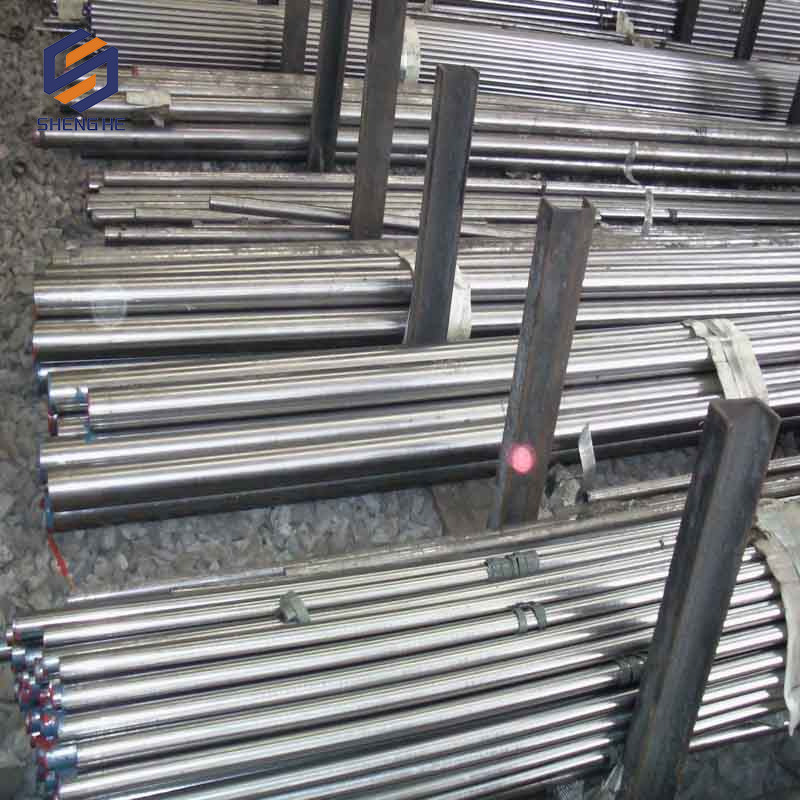
Many machine shops manufacture custom tooling or modify existing tool blanks. When procuring high speed steel bar stock, you must demand proper documentation. Always request certified mill test reports (MTRs) from your vendor. These critical documents verify the exact chemical composition of the steel. They ensure you actually receive the molybdenum, vanadium, or cobalt percentages you paid for. Without an MTR, you are simply guessing at the material's capabilities.
Procurement managers need a highly reliable system for evaluating vendors. A reputable HSS tool steel supplier must meet strict industrial criteria. Do not compromise on raw material quality.
Follow this specific checklist when evaluating a new steel supplier:
Traceability: Ensure the supplier can trace every single bar back to its original master melt at the mill.
Batch Consistency: Look for vendors who guarantee uniform internal microstructure across multiple deliveries over time.
Heat-Treat Readiness: Verify the raw material is supplied in a properly annealed state. This ensures easy machining before the final hardening process.
Working with certified suppliers prevents disastrous tooling failures on your shop floor. A reliable supplier acts as a true partner in your manufacturing success.
Selecting the correct high speed steel requires clear, logical shortlisting. Always review your technical decision tree before authorizing a purchase. Ask yourself critical questions. Is the machine setup rigid or prone to vibration? What is the specific workpiece material you are cutting? Are you operating a robust drill, a delicate tap, or a heavy-duty mill? By answering these questions honestly, you eliminate costly guesswork from your procurement process.
Your next steps should be highly action-oriented. Audit your current tool failure modes immediately. Look closely at your scrap bin. If your tools suffer from frequent edge chipping, you need more toughness. If they show severe thermal wear and discoloration, you likely need a cobalt upgrade. Consider changing from standard M2 to M35 if heat is your primary enemy. Finally, contact a qualified supplier for a comprehensive tooling material audit. Upgrading your raw materials directly boosts your bottom-line efficiency and operational peace of mind.
A: Yes, you can use M2 on stainless steel for short, light production runs. However, stainless steel generates significant friction and heat. M2 lacks the high red hardness required for sustained cutting in these harsh conditions. For long-term production on stainless, upgrading to a cobalt grade like M35 provides far better wear resistance.
A: Traditional HSS is cast and forged, which can lead to uneven carbide pooling. PM-HSS is created by atomizing molten steel into powder, then compacting it under immense pressure. This results in a highly uniform, fine-grained structure. PM-HSS offers significantly better wear resistance and toughness simultaneously compared to conventional cast grades.
A: High speed steel begins to permanently lose its temper and hardness when exposed to temperatures exceeding its specific red hardness limit. For standard M2, this critical threshold is roughly 540°C (1000°F). Cobalt-alloyed grades like M42 can withstand slightly higher temperatures, making them essential for high-heat machining applications.
A: Taps break when they lack sufficient toughness or face excessive lateral forces. If your tap breaks rather than dulls, the material might be too brittle for the application. Extreme hardness is detrimental for delicate tapping. Fixing this requires switching to a tougher grade like M2, ensuring perfect machine alignment, and improving chip evacuation.


