
Views: 0 Author: Site Editor Publish Time: 2026-09-22 Origin: Site


Standard cutting tools degrade rapidly under high-temperature, high-friction environments. This rapid degradation leads to costly downtime and frequent tool replacement. Operators often struggle to maintain tight tolerances when cutting edges break down prematurely. Upgrading to cobalt high speed steel stabilizes the cutting edge at elevated temperatures. You can tackle challenging workpiece materials much more effectively by integrating this solution.
Choosing between M35 (5% cobalt) and M42 (8% cobalt) requires a strategic approach. You must balance maximum heat resistance against material toughness and raw material costs. In this guide, you will learn how material composition dictates performance limits on the shop floor. We will explore practical scenarios to help you match the right steel grade to your specific machining goals. You will also discover how to evaluate suppliers to ensure optimal heat treatment quality before making a purchasing decision.
Cobalt Content: M35 high speed steel contains ~5% cobalt for a balance of hardness and toughness; M42 contains ~8% cobalt for maximum heat resistance.
The Core Trade-off: M42 delivers superior HSS red hardness for continuous cutting of tough alloys, while M35 offers better shock resistance for interrupted cuts.
Cost & Grindability: M35 is generally more cost-effective and easier to grind or resharpen, making it highly scalable for complex tool geometries.
Supplier Cruciality: Securing either grade from a verified high speed steel supplier is critical, as improper heat treatment negates the benefits of the cobalt alloy.
Modern manufacturing often involves machining work-hardening materials. Common examples include titanium aerospace components, Inconel exhaust systems, and austenitic stainless steels. Cutting these resilient metals generates immense friction at the tool-workpiece interface. This friction produces localized heat zones exceeding normal operational limits. Standard M2 High Speed Steel quickly loses its temper under these severe conditions. The cutting edge softens, deforms, and eventually fails prematurely. Tool failure halts production lines and creates unacceptable scrap rates. You need a more robust material foundation to maintain continuous production cycles.
Metallurgists solve thermal degradation by modifying the base steel alloy. The addition of cobalt into the steel matrix fundamentally changes how the tool absorbs heat. Cobalt raises the critical melting point of the alloy structure. It prevents the rapid softening typically seen in standard grades. This upgrade allows the cutting tool to maintain a sharp, precise edge even at red-hot operating temperatures. Operators can confidently push spindle speeds higher. They can also increase feed rates without instantly destroying the tool geometry. Cobalt acts as a thermal stabilizer, ensuring predictable tool wear rather than catastrophic breakage.
Upgrading tool materials always involves an upfront financial premium. You must justify this investment through measurable shop floor performance. The primary success metric involves evaluating tool life extension against the initial purchase price. Cobalt grades cost more to procure and manufacture. However, they drastically reduce the frequency of tool changes. They also minimize machine idle time. Your ultimate goal is to reduce the overall cost-per-part. By extending tool longevity and increasing material removal rates, cobalt alloys deliver substantial efficiency gains. You can maximize profitability by carefully tracking these operational improvements.
Understanding the exact chemical composition helps you predict how a tool will behave during aggressive machining. Both M35 and M42 belong to the molybdenum-tungsten family of high speed steels. The distinct ratios of their alloying elements dictate their final mechanical properties.
Industry standards often refer to M35 high speed steel as HS 6-5-2-5. This designation highlights its elemental makeup. The alloy contains approximately 5% cobalt, 6% tungsten, and 5% molybdenum. Vanadium is also present at roughly 2%. Toolmakers typically heat-treat M35 to achieve a hardness range of 64–66 HRC. This specific composition creates an incredibly versatile profile. It delivers a balanced mix of wear resistance and impact strength. M35 bridges the gap between standard M2 steel and ultra-hard specialty alloys.
By contrast, M42 high speed steel goes by the designation HS 2-9-1-8. Its formula shifts the balance significantly to prioritize thermal stability. The composition features approximately 8% cobalt and a heavy 9.5% molybdenum content. Tungsten is reduced to roughly 1.5%. Heat treatment protocols typically push M42 to a staggering 68–70 HRC. This intense hardness provides exceptional high-temperature wear resistance. However, the trade-off is unavoidable. M42 is inherently more brittle than M35. It requires rigid machining setups to prevent sudden edge chipping.
Material Composition Comparison Chart
Steel Grade | Cobalt (Co) | Tungsten (W) | Molybdenum (Mo) | Typical Hardness (HRC) | Primary Characteristic |
|---|---|---|---|---|---|
M35 (HS 6-5-2-5) | ~5% | ~6.0% | ~5.0% | 64 - 66 | Balanced Toughness |
M42 (HS 2-9-1-8) | ~8% | ~1.5% | ~9.5% | 68 - 70 | Maximum Heat Resistance |
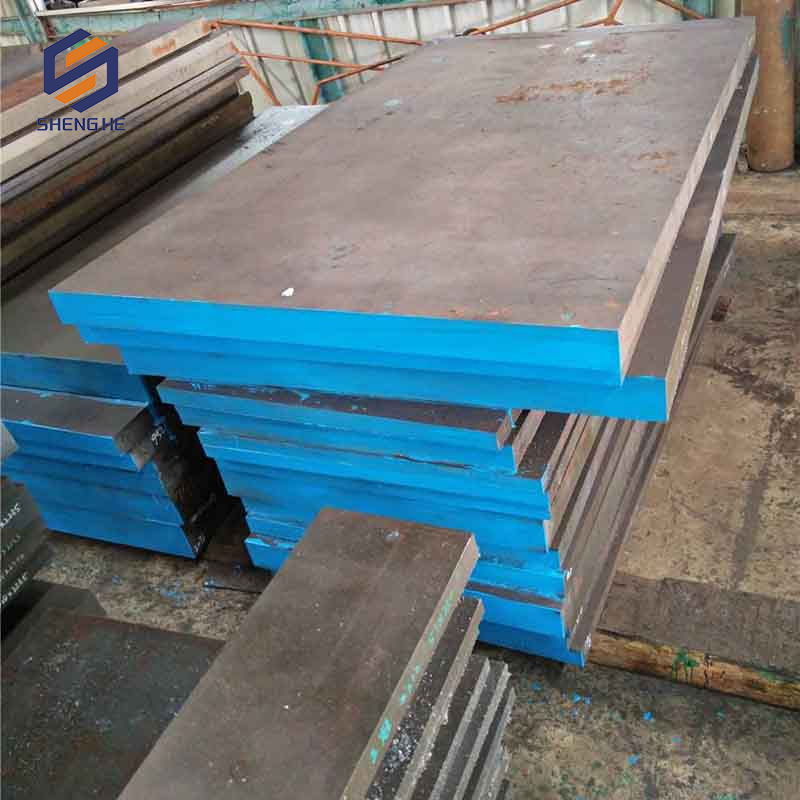
The defining characteristic of cobalt alloys is their ability to withstand severe thermal stress. We measure this property as HSS red hardness. When cutting-edge temperatures exceed 500°C (930°F), standard tool steels quickly soften. M42 significantly outperforms M35 in retaining its structural hardness at these extreme temperatures. The extra 3% cobalt in M42 fortifies the crystalline matrix. This superior heat retention directly translates to higher allowable cutting speeds. You can feed M42 tools faster through abrasive materials without risking thermal collapse.
Extreme hardness introduces structural vulnerabilities. M42's rigid matrix makes it highly susceptible to micro-chipping under less-than-ideal conditions. Tool failure often occurs instantly if the machining setup lacks rigidity. You must carefully assess the following risk factors before deploying M42:
Unstable Workholding: Any part movement or chatter transfers destructive shockwaves directly into the brittle cutting edge.
Older Machine Tools: Worn spindle bearings or loose ways generate high vibration frequencies. M42 struggles to absorb these vibrations.
Interrupted Cuts: Machining across keyways, cross-holes, or uneven cast surfaces creates repeated impacts. These impacts will likely shatter an M42 tool.
M35 naturally mitigates this implementation risk. Its lower hardness provides much higher shock resistance. The matrix can flex slightly under sudden impact loads. This flexibility makes M35 a safer, more reliable choice for manual machines or less rigid CNC setups.
Tool manufacturers care deeply about how easily a material can be shaped. M35 is significantly easier to grind than its harder counterpart. Abrasive wheels cut through M35 efficiently without generating excessive friction. Toolmakers heavily favor M35 for highly complex tool geometries. Gear hobs, splined broaches, and intricate form tools rely on M35 for accurate manufacturing. Conversely, M42 requires specialized grinding wheels, often utilizing cubic boron nitride (CBN). Manufacturers must maintain strict coolant flow and heat control during sharpening operations. Any localized overheating during grinding will cause microscopic surface cracking, ruining the M42 tool before it ever touches a workpiece.
Choosing the right grade depends entirely on your target application and operational environment. M35 serves as the ultimate utility player in demanding machine shops. We recommend specifying M35 when toughness remains a critical priority.
Target Tools: Large diameter twist drills, heavy-duty structural taps, long broaches, and roughing milling cutters.
Target Applications: Interrupted cutting operations dictate the use of M35. It excels when machining standard 304 or 316 stainless steels. It performs exceptionally well in cast iron. Choose M35 for scenarios where tool breakage, rather than gradual edge wear, represents your primary failure mode. The tool will survive sudden shocks while still offering robust thermal protection.
M42 acts as a specialized instrument designed for extreme speed and abrasive resistance. You should reserve this grade for environments where heat generation is the absolute limiting factor in your production cycle.
Target Tools: High-performance end mills, bimetal bandsaw blade teeth, and specialized lathe form tools.
Target Applications: Specify M42 for continuous, high-speed turning or milling. It dominates when machining aerospace alloys like Inconel 718 and Titanium Ti-6Al-4V. It cuts easily through heat-treated steels and abrasive composites. Choose M42 when edge wear and thermal softening are your primary failure modes. The rigid setup will protect the tool, allowing the high cobalt content to deliver maximum longevity.
M42 inherently carries a higher raw material premium due to its elevated cobalt and molybdenum content. Furthermore, the fabrication and grinding costs associated with M42 exceed those of M35. Buyers must carefully verify that the anticipated increase in tool life actually justifies this premium. Conducting a small-scale trial run provides valuable data. You should calculate the exact number of parts produced per tool. Compare the performance of M35 against M42 in your specific machines. This empirical data prevents you from over-specifying a more expensive alloy when M35 might easily fulfill your production requirements.
Procuring raw stock from a verified high speed steel supplier is arguably the most critical step in tool fabrication. Even the perfect chemical composition will fail if the manufacturing process lacks strict quality control. You must investigate two primary checkpoints.
First, verify batch consistency. Variations in cobalt distribution throughout the steel billet create weak spots. These inconsistencies lead to unpredictable tool life and catastrophic failure during heavy cuts. Second, demand heat treatment certification. Any high speed cutting tool steel containing cobalt is incredibly sensitive to its hardening and tempering cycles. If the supplier quenches the steel incorrectly, the alloy either remains too soft or becomes dangerously brittle. Comprehensive supplier documentation remains non-negotiable for critical applications.
Before placing a bulk order, you should request official Material Test Reports (MTRs) from your shortlisted suppliers. These documents confirm the exact chemical composition of the batch. Next, pilot a small batch of custom tools under actual shop-floor conditions. Push the tools to their limits using your standard feeds and speeds. Track the tool wear meticulously under a microscope. You can safely scale your procurement strategy once you validate the supplier's quality and the tool's performance.
Choosing between M35 and M42 dictates your success in machining difficult alloys. Your final decision logic should follow a clear path. Choose M35 for a reliable, tough, and cost-effective upgrade over standard HSS. It excels in applications involving interrupted cuts or older machine tools. Conversely, choose M42 when maximum red hardness and high-speed wear resistance are strictly required. It thrives in continuous cuts on difficult-to-machine aerospace alloys.
Your actionable next step is to engage directly with a certified metallurgist or trusted supplier. Discuss your specific workpiece materials, available machine rigidity, and target production rates. By outlining these parameters, you can secure accurate pricing and confident material recommendations for M35 and M42 bar stock.
A: Yes, M35 is excellent for cutting 304 and 316 stainless steels. It offers enough red hardness to handle the severe heat generated by work-hardening materials. Importantly, it does this without being overly brittle, preventing edge chipping during aggressive feed rates.
A: No. While M42 is extremely hard for a high speed steel (reaching up to 70 HRC), solid carbide remains significantly harder and more heat-resistant. However, carbide is much more brittle and considerably more expensive, making M42 a better choice for environments lacking extreme rigidity.
A: Improper heat treatment completely undermines the alloy. It can leave the steel too soft, causing rapid thermal wear, or too brittle, causing the tool to shatter upon impact. Precision tempering cycles are strictly required to unlock the specific red hardness properties of both M35 and M42.


