
Views: 0 Author: Site Editor Publish Time: 2026-09-27 Origin: Site


Aluminum die casting exposes tooling to aggressive thermal cycling between 650°C and 700°C. The process forces molten metal into cavities under high injection pressures. The tooling then undergoes rapid cooling from die lubricant sprays. These extreme environmental swings create massive internal stresses. Premature die failure leads directly to catastrophic production downtime and steep replacement costs. Selecting the optimal Hot Work Tool Steel requires more than evaluating simple hardness metrics. You must calculate a precise balance of toughness and thermal resistance based on specific production targets.
This article provides an evidence-based framework for evaluating steel grades. You will learn how to match material properties to your manufacturing goals. We will explore strategies to mitigate common die failure modes. Finally, we will outline critical steps for vetting suppliers. By understanding these variables, you can optimize your tooling investments and maximize overall production efficiency.
Thermal Fatigue is the Primary Threat: Prioritize heat checking resistant steel to mitigate the most common cause of die failure in aluminum casting.
H13 is the Industry Baseline: Standard H13 hot work tool steel is versatile, but high-volume or complex runs often require ESR (Electro-Slag Remelted) variants for isotropic toughness.
Heat Treatment Equals Material Quality: Even premium tool steel will fail prematurely if heat treatment protocols (like NADCA #207) are not strictly followed.
Align Material to Production Volume: Do not over-specify. Standard grades suit short-run prototypes, while premium proprietary grades offer better ROI for multi-million shot requirements.
You cannot select the right steel without identifying the primary failure risk of your specific cast part geometry. Different mold designs face different physical stresses. Business leaders must map these engineering risks to financial outcomes. Selecting an incorrect grade accelerates wear and halts production lines. We classify tooling failures into three primary categories.
Thermal Fatigue (Heat Checking): This represents the most frequent failure mechanism in aluminum casting. Molten aluminum injects at extremely high temperatures. Immediately after part ejection, industrial sprays rapidly cool the die surface. This violent temperature delta forces the steel to repeatedly expand and contract. Over thousands of cycles, microscopic surface cracks form. You must utilize a robust thermal fatigue resistant steel featuring high ductility to delay this crack initiation.
Erosion and Soldering (Washout): High-velocity molten aluminum aggressively scours the die surface. This physical friction washes away intricate tooling details. Additionally, the aluminum can chemically bond to the steel surface. This chemical soldering ruins part finishes. Mitigating washout requires a steel capable of retaining high hardness at highly elevated temperatures.
Gross Cracking: Gross cracking is a catastrophic failure. It often results from overwhelming mechanical stress, sharp tooling corners, or improper pre-heating practices. A die can split entirely in half during operation. Preventing gross cracking demands exceptional impact toughness. It also requires a high degree of structural purity within the raw material block.
Common Mistake: Many engineers mistakenly prioritize surface hardness to fight erosion. This compromises core toughness. A brittle core exponentially increases the risk of gross cracking. You must balance both properties.
Evaluating die casting die steel requires a holistic look at metallurgical properties. The interaction between these four criteria dictates how long your tooling will survive on the production floor.
High-Temperature Yield Strength (Hot Strength): Steel naturally softens when exposed to extreme heat. Hot strength measures the ability of the material to resist deformation while contacting molten aluminum. High yield strength ensures the die maintains structural integrity. It prevents the mold cavity from warping under intense injection pressure.
Toughness and Ductility: Toughness serves as the critical counterbalance to hardness. Complex die designs often feature sharp corners and deep ribs. These geometric features act as stress concentrators. High impact strength stops microscopic surface cracks from propagating deep into the tool core. Ductility allows the metal to absorb mechanical shocks without fracturing.
Isotropic Properties: Material purity defines isotropic performance. Standard steel blocks often exhibit different strength levels depending on the testing direction. Material properties must be uniform in all directions. Equal longitudinal and transverse toughness prevents unpredictable, localized failures. Electro-slag remelting generally guarantees this isotropic purity.
Thermal Conductivity: Efficient heat transfer significantly impacts cycle times. High thermal conductivity rapidly pulls heat away from the die surface. This reduces the thermal gradient across the steel block. Lower thermal gradients directly minimize heat checking risks. Faster heat dissipation also allows for shorter cooling cycles, boosting overall daily output.
The industry relies heavily on established solution categories. Benchmarking these grades against your production needs prevents both under-performance and over-spending. We generally divide tooling materials into three primary tiers.
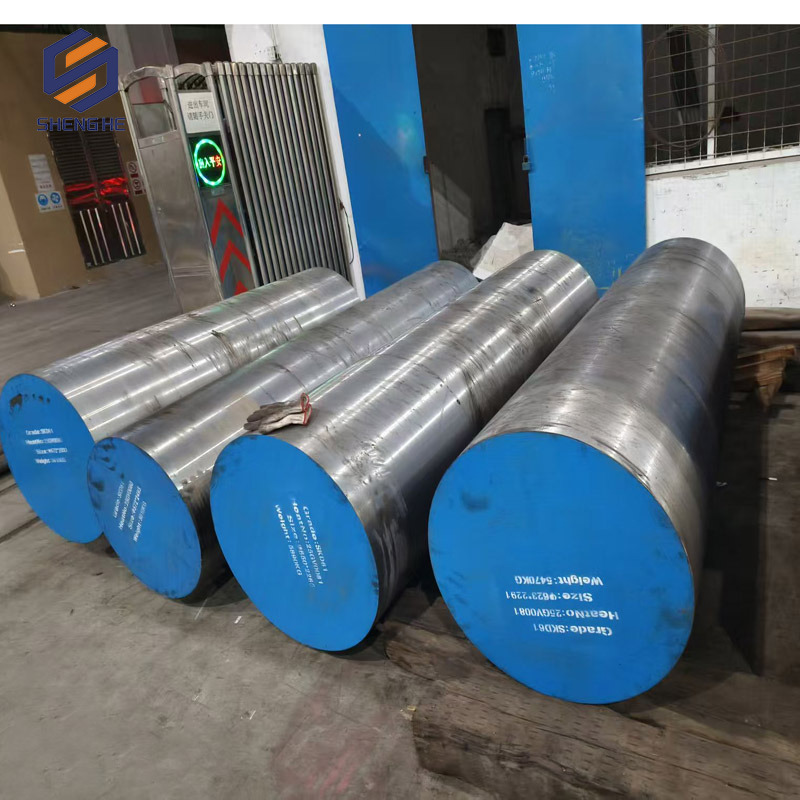
Standard H13 (SKD61 / 1.2344) serves as the default baseline. This grade offers a highly balanced, cost-effective profile. It handles low-to-medium volume production exceptionally well. Manufacturers worldwide trust standard H13 hot work tool steel for simple geometries.
Premium H13 (ESR/VAR) introduces advanced refining processes. Electro-Slag Remelted or Vacuum Arc Remelted H13 undergoes secondary purification. This step significantly reduces sulfur and phosphorus micro-inclusions. Fewer inclusions drastically improve impact toughness. Premium H13 delays crack initiation and extends tool life. Engineers mandate ESR grades for larger dies and higher volume runs.
High-Performance Proprietary Grades like Dievar or QRO 90 push metallurgical boundaries. These alloys typically feature lower silicon levels and higher molybdenum and vanadium content compared to standard H13. They are exclusively evaluated for ultra-long runs. The initial raw material cost often runs two to three times higher. However, delaying catastrophic heat checking easily offsets this premium over millions of shots.
Table 1: Benchmarking Die Casting Tool Steel Grades
Material Category | Standard Designation | Relative Toughness | Ideal Production Volume | Cost Premium |
|---|---|---|---|---|
Standard Grade | H13 / SKD61 / 1.2344 | Moderate | Low to Medium | Baseline (1x) |
Premium Refined | H13 ESR / VAR | High (Isotropic) | Medium to High | Moderate (1.3x - 1.5x) |
Proprietary Alloys | Dievar, QRO 90 equivalents | Exceptional | Extreme / Multi-Million | High (2x - 3x) |
Selecting aluminum die casting tool steel requires a strict decision framework. Over-specifying material drains capital without delivering tangible yield benefits. Under-specifying invites catastrophic downtime. You must align your material choice directly with expected shot counts.
Low Volume / Prototyping (Under 50,000 shots): Standard H13 remains structurally sufficient. It provides an optimal economic balance for short runs. Investing in proprietary ESR grades here reduces your return on investment. The tool will likely become obsolete before thermal fatigue destroys it.
Medium to High Volume (50,000 to 150,000 shots): Premium ESR H13 becomes mandatory in this bracket. The cost of unplanned downtime easily outweighs the raw material premium. Isotropic toughness is strictly required to survive the cumulative thermal stress of 100,000 shots.
Extreme Volume or Complex Geometries (Over 150,000 shots): High-alloy proprietary grades dominate this space. Decisions here rely on strict cost-per-part modeling rather than upfront tooling expense. Extended tool life reduces setup changes and stabilizes part quality.
Assumption Check: Material selection assumes baseline operational excellence. The best steel in the world cannot compensate for poor engineering. Inadequate cooling channel placement creates hot spots. Highly aggressive cycle times prevent proper thermal dissipation. Poor die design will destroy premium steel just as quickly as standard grades. Evaluate your operational parameters before blaming the material.
Sourcing the raw block accounts for only half of the performance equation. Processing dictates the final outcome. A reliable hot work tool steel supplier does much more than cut metal. They ensure the material is structurally sound and ready for intense machining.
Heat treatment compliance stands as the single biggest implementation risk. You must verify your supplier coordinates closely with certified heat treaters. They must follow strict NADCA (North American Die Casting Association) standards. Improper quenching rates ruin impact toughness. A poorly tempered block of premium H13 will perform worse than a properly treated block of standard H13.
Demand comprehensive material certification and traceability. Reliable suppliers provide detailed ultrasonic testing reports. Look for SEP 1921 compliance to verify internal micro-cleanliness. You should also review mill certificates to guarantee a lack of porosity before expensive machining begins. Finding an inclusion halfway through a complex milling operation wastes thousands of dollars.
Factor machinability and dimensional stability into your project plans. Higher alloyed steels naturally increase tooling wear during the die manufacturing phase. Complex geometries often require EDM (Electrical Discharge Machining). You must apply precise EDM protocols to avoid white-layer micro-cracking. If your supplier does not advise you on proper stress-relieving steps post-EDM, surface cracks will initiate immediately during the first production run.
Choosing the right material requires an ROI-driven approach. You must balance upfront material expenses against expected tool life and reduced machine downtime. Identifying your failure modes early prevents costly missteps later in production.
H13 ESR remains the most dependable middle-ground for the vast majority of aluminum casting applications. It provides excellent toughness and delays cracking, provided you rigorously control the heat treatment process. Standard grades work well for prototypes, while proprietary alloys conquer ultra-long runs.
Your next step involves direct supplier engagement. Encourage your engineering team to request technical data sheets and ultrasonic test certifications. Schedule a tooling consultation tailored specifically to your die design and intended shot-count targets.
A: Standard H13 is melted conventionally, which leaves microscopic impurities. ESR (Electro-Slag Remelting) acts as a secondary refining process. It removes non-metallic inclusions like sulfur and phosphorus. This process significantly improves isotropic toughness and delays crack initiation without altering the core chemical composition.
A: Heat checking occurs due to violent thermal expansion and contraction cycles. Molten aluminum heats the die, and lubricant sprays rapidly cool it. These extreme deltas cause surface micro-cracking. Using a highly ductile heat checking resistant steel allows the mold to absorb thermal shocks, effectively delaying crack formation.
A: Yes, in specific niche applications. H11 features a lower vanadium content than H13. This yields slightly higher impact toughness but marginally lower high-temperature wear resistance. H11 is often preferred for extremely large dies where gross cracking poses a much greater risk than surface erosion.
A: You must request original mill test certificates to verify chemical composition. Demand ultrasonic testing reports (such as SEP 1921 Class E/e) to ensure internal micro-cleanliness. Finally, ask for annealing microstructure reports to confirm the block is properly prepared for machining and subsequent heat treatment.


