
Views: 0 Author: Site Editor Publish Time: 2026-08-18 Origin: Site


Premature tooling failure drives up manufacturing expenses through unexpected downtime and costly tool replacements. Defective production parts often trace back directly to a fundamental error in material selection. Operating an intense manufacturing line requires precise metallurgical choices. Engineering and procurement teams frequently struggle when balancing upfront material expenses against rigorous thermal demands. Selecting an inappropriate steel grade creates immediate bottlenecks in your production environment.
You need a reliable framework to handle extreme mechanical stress during industrial fabrication. We will provide a definitive, technical comparison of distinct tool steels to guide your specifications accurately. You will learn how to match specific material properties to exact thermal environments for dies, blades, and molds. This comprehensive guide ensures confident, data-backed material selection for your next critical tooling project. By understanding these underlying metallurgical principles, you can significantly optimize your manufacturing efficiency.
Thermal Thresholds: Hot work steels are engineered to maintain strength and resist thermal fatigue at elevated temperatures (typically above 200°C / 400°F), whereas cold work steels are optimized for room-temperature applications.
Property Trade-offs: Cold work steels prioritize extreme hardness and wear resistance; hot work steels sacrifice some room-temperature hardness for superior toughness and "red hardness" (resistance to softening when hot).
Primary Applications: Cold work steel is ideal for blanking, stamping, and shearing. Hot work steel is standard for die casting, hot forging, and extrusion.
Total Cost of Ownership (TCO): Selecting the correct grade impacts not just raw material pricing, but heat treatment costs, machinability, and tool lifecycle predictability.
When metals deform, they undergo profound micro-structural changes. These structural shifts depend entirely on the recrystallization temperature of the specific metal being formed. Tool steels require careful selection based on the exact temperature of the material you are processing. If you shape metals below this critical temperature threshold, the manufacturing process demands specific room-temperature durability.
Engineers rely heavily on cold work steel to withstand massive compressive stresses. It resists abrasive wear excellently when deforming materials near room temperature. Manufacturers design these specific alloys to hold a sharp edge continuously. They maintain highly precise dimensions under immense physical pressure. When stamping thick metal sheets, the tool face experiences extreme friction. The chosen alloy must resist this intense friction without losing its dimensional accuracy.
Conversely, you need hot work steel for extreme thermal environments. It endures prolonged exposure to intense heat during forming operations. It also survives rapid cooling cycles without cracking or failing catastrophically. Metallurgists refer to this specific capability as thermal shock resistance. During die casting, molten metal floods the mold rapidly. The tooling absorbs massive heat instantly, then cools quickly before the next production cycle begins.
The ultimate dividing line between these two categories is "red hardness." Industry experts also call this vital property hot hardness. It defines an alloy's fundamental ability to retain structural integrity at red-hot temperatures. If your tooling loses hardness when heated, it will fail rapidly under operational load. Red hardness ensures the tool does not soften during continuous high-temperature production cycles.
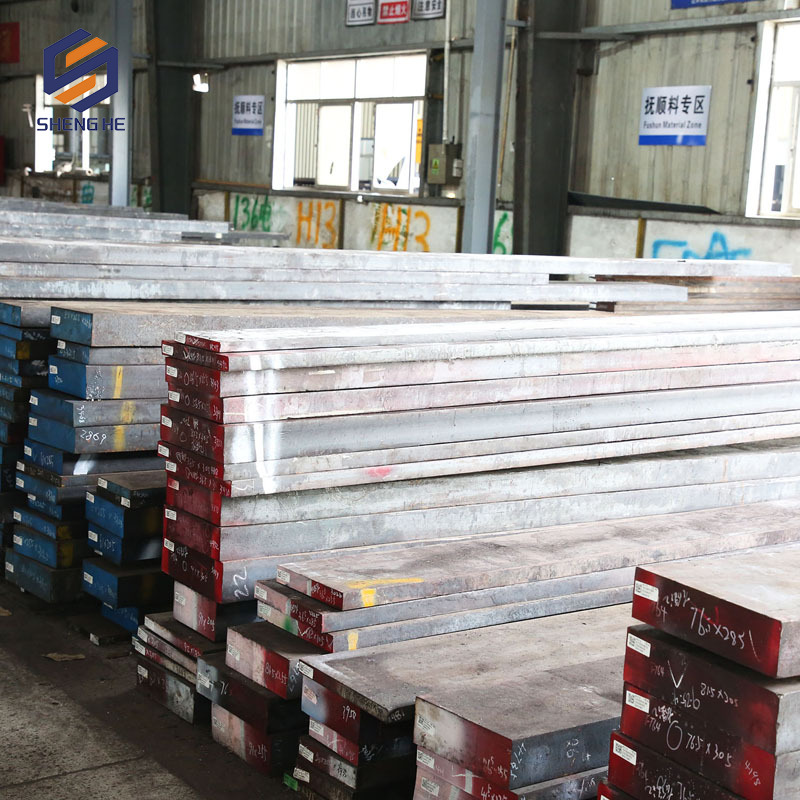
Metallurgical composition drives the core performance differences between these materials. We can observe distinct alloying strategies tailored for specific operational stresses. Cold work alloys feature noticeably higher carbon content, often ranging from 1.0% to 2.0%. They also contain significant chromium levels. This precise combination maximizes carbide formation within the metal matrix. These micro-structures act like microscopic cobblestones, resisting the grinding action of sheet metal or abrasive plastics.
On the other hand, hot work alloys utilize lower carbon content, typically resting between 0.35% and 0.45%. Metallurgists deliberately add tungsten, molybdenum, and vanadium to these specific mixtures. These critical elements prevent brittleness at elevated temperatures. They help the metal resist thermal fatigue during rapid heating and cooling. Vanadium acts as a grain refiner, ensuring the internal structure remains fine and highly resilient. This lower carbon baseline ensures the material does not shatter under thermal shock.
You must balance maximum hardness against overall toughness when specifying materials. Cold work grades achieve exceptional hardness levels, often hitting 58 to 64 HRC on the Rockwell scale. This extreme hardness provides an incredible cutting edge. However, it makes the tooling more susceptible to chipping under sudden impacts.
Hot work grades operate intentionally at lower hardness ranges, typically 44 to 54 HRC. They maintain the necessary ductility to absorb heavy impacts safely. This enhanced ductility also manages severe thermal expansion without causing internal fractures during continuous production.
Wear resistance profiles diverge sharply between the two categories. Cold work focuses heavily on defeating abrasive wear caused by metal sliding against metal. Hot work prioritizes survival against erosive wear from flowing molten materials. It also focuses heavily on mitigating thermal degradation over thousands of continuous casting cycles.
Performance Metric | Cold Work Tool Steels | Hot Work Tool Steels |
|---|---|---|
Typical Carbon Content | 1.0% to 2.0% | 0.35% to 0.45% |
Primary Alloying Elements | High Chromium | Tungsten, Molybdenum, Vanadium |
Typical Hardness (HRC) | 58 - 64 | 44 - 54 |
Red Hardness Capability | Low | Exceptionally High |
Primary Wear Focus | Abrasive Wear | Thermal and Erosive Wear |
Thermal Shock Resistance | Poor | Excellent |
The American Iron and Steel Institute (AISI) categorizes these tool steels into distinct classifications. Understanding these specific families helps you specify the correct material confidently.
Air-Hardening (A-Series, e.g., A2): Grades like A2 offer excellent dimensional stability during the heat treatment process. They provide a highly balanced baseline for general tooling needs. Machinists appreciate A2 for its predictable behavior during fabrication.
High-Carbon, High-Chromium (D-Series, e.g., D2): The manufacturing industry considers D2 the absolute standard for severe abrasive environments. You should use it for long-run stamping operations. It forms massive carbides resisting wear incredibly well.
Oil-Hardening (O-Series, e.g., O1): Alloys like O1 remain highly cost-effective and easy to machine. They fit perfectly for short-run tooling applications where high wear resistance remains less critical.
Chromium-Based (H-Series, e.g., H13, H11): Grades like H13 and H11 remain the most widely used across global manufacturing. They deliver an excellent balance of base toughness and heat-checking resistance. You will find H13 in nearly every modern aluminum die-casting facility.
Tungsten & Molybdenum-Based (H21, etc.): You will reserve grades like H21 for extreme temperature applications. These specialized alloys resist softening at even higher temperatures. However, they tend to be significantly more brittle than standard chromium-based options.
Swapping these specialized materials carries massive implementation risks. If you use a cold work grade in a high-heat environment, it suffers rapid softening. The tool undergoes immediate plastic deformation. Consider a die-caster using D2 for an aluminum mold. The extreme thermal shock will cause massive heat-checking networks. The mold will likely crack in half during the first few dozen shots.
Conversely, using a hot work grade in a cold stamping die accelerates abrasive wear. This material mismatch quickly leads to premature galling and tool destruction. An H13 tool will absorb stamping impacts effortlessly due to its high toughness. However, its cutting edges will round over quickly, creating unacceptable burrs on your stamped parts.
Matching the specific steel grade to your unique manufacturing process ensures optimal tool life. We can examine standard industrial use cases for each material category below.
You should specify these materials for operations involving severe friction at ambient temperatures.
Blanking, punching, and coining dies where holding a precise edge matters immensely.
Thread rolling dies and heavy-duty shear blades requiring massive compressive strength.
High-volume plastic injection molds operating near room temperature. They excel when processing highly abrasive glass-filled resins where heat remains minimal.
Deep drawing dies forming sheet metal into complex automotive structural panels.
Paper and foil cutting knives used extensively in continuous packaging lines.
You should specify these specialized materials for operations defined by intense thermal cycling.
Die-casting molds designed specifically for aluminum, zinc, and magnesium alloys.
Hot forging dies shaping red-hot steel blanks into dense structural components.
Hot extrusion mandrels pushing heated billets into complex continuous profiles.
Tooling built specifically for commercial glass manufacturing and molten shaping.
Plastic injection molds handling extremely high-temperature specialty polymers.
Engineers need a highly structured approach to finalize material specifications. Follow this practical evaluation framework to select the optimal grade for your specific application.
Step 1: Define the Operating Temperature Profile: Analyze your operational environment thoroughly. Is the tool exposed to continuous heat during its cycle? Does it face rapid cyclic heating and cooling? Or does it operate strictly at ambient room temperatures? Your baseline operating temperature dictates your starting material category immediately.
Step 2: Identify Primary Failure Modes: Review your historical tooling data carefully. If past tools failed due to severe abrasive wear, you need cold work solutions. If they suffered from edge chipping, you require higher base toughness. If severe heat checking or thermal cracking occurred, you must pivot directly to hot work grades.
Step 3: Factor in Machinability and Heat Treatment: Manufacturing the tool itself requires serious consideration. High-chrome alloys like D2 are notoriously difficult to machine and grind. They wear down cutting tools rapidly during fabrication. H-series steels generally machine much easier. However, they demand highly precise, controlled heat treatment. You must control this thermal treatment carefully to maximize their thermal fatigue resistance.
Step 4: Assess Production Volume: Weigh your upfront raw material cost against the expected lifecycle of the tool. Avoid over-specifying highly expensive, complex grades for short, limited production runs. Similarly, never under-specify materials for continuous, high-volume automated lines. Proper material alignment keeps your production running smoothly while optimizing your initial tooling investments.
The choice between these critical tooling materials is rarely ambiguous. It depends entirely on the harsh thermal realities of your specific manufacturing process. You must match the alloy's red hardness and structural toughness to your exact environment. Abrasive room-temperature operations demand high carbon and elevated chromium levels. Intense thermal cycling requires specialized, lower-carbon alloys to prevent catastrophic heat checking.
As a practical next step, gather highly specific details regarding your operating temperatures. Document your exact cycle times and expected production volumes clearly. Finally, consult directly with metallurgical engineers or trusted steel suppliers. They will use your operational data to finalize your specific grade selection confidently.
A: Yes, but it remains heavily sub-optimal. It provides excellent base toughness to prevent severe edge chipping during heavy impacts. However, its lower wear resistance significantly shortens tool life in abrasive cold applications. You will likely face frequent, costly tool replacements if you mismatch these materials.
A: Material pricing varies heavily by specific grade, alloy composition, and current market surcharges. Generally, highly alloyed hot working materials command a premium. Specialized powder-metallurgy cold working alloys also carry noticeably higher price tags. This increased cost stems directly from their highly complex manufacturing and refinement processes.
A: Cold working alloys prioritize achieving maximum surface hardness while strictly controlling dimensional distortion. Conversely, hot working materials require highly careful, precise tempering. This process balances foundational toughness with essential red hardness. It frequently involves multiple tempering cycles to relieve internal stress safely before production use.


