


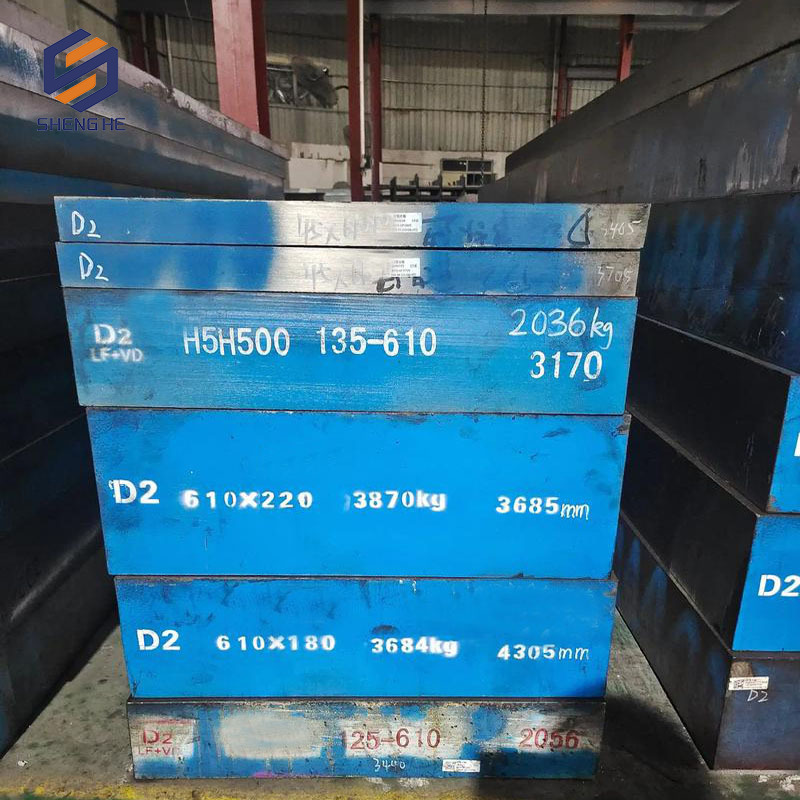
Selecting the right material for high-wear tooling applications dictates manufacturing success. Premature tool failure drives up production downtime rapidly. Engineers face massive logistical hurdles when dies break mid-run. Managing the lifecycle of stamping dies requires deep metallurgical understanding. You need a material built to withstand extreme abrasion reliably. We define 1.2379 steel (also known as X153CrMoV12) as a high-carbon, high-chromium Cold Work Tool Steel. Manufacturers engineer it exactly for these harsh industrial conditions. This article serves as a technical and procurement evaluation guide. Engineers and buyers will discover if this grade fits their manufacturing needs perfectly. We will cover chemical properties, performance limits, and specific sourcing strategies. You will learn how to balance toughness requirements against wear resistance.
Standard Equivalency: 1.2379 is the DIN EN ISO 4957 standard equivalent to AISI D2 and JIS SKD11.
Core Value Proposition: Offers exceptional abrasive wear resistance and high compressive strength, ideal for long-run tooling.
Implementation Trade-offs: High wear resistance comes at the cost of lower toughness and higher machining difficulty compared to lower-alloy steels.
Procurement Watch-out: For high-stress applications, upgrading to ESR (Electro-Slag Remelted) 1.2379 is critical to minimize micro-cracking risks.
Understanding standard frameworks is crucial for global manufacturing. This material fits perfectly into international steel specifications. Engineers recognize it under the Werkstoffnummer system as 1.2379. The DIN alphanumeric designation is X153CrMoV12. Global supply chains require flexible sourcing strategies. Buyers often need direct cross-reference grades. You can confidently substitute AISI D2 in North American markets. Japanese markets utilize JIS SKD11 as the direct equivalent. These cross-references simplify global supply chain sourcing significantly.
Let us examine the features-to-outcomes chemical analysis. Every element plays a specific role in final tooling performance.
Carbon (C) levels hover around 1.55%. High carbon drives primary carbide formation during solidification. These massive carbides result in extreme post-heat-treatment hardness. They provide the core abrasive wear resistance. Chromium carbides offer vastly superior hardness compared to standard iron carbides. This microstructural advantage forms the backbone of its industrial utility.
Chromium (Cr) makes up about 12.0% of the alloy. It provides deep hardening capabilities during the quench phase. High chromium also offers mild corrosion resistance. However, you must remember it is not a stainless steel. It will rust quickly without proper oil protection.
Molybdenum (Mo) sits near 0.8% and Vanadium (V) at 0.9%. They enhance secondary hardening during tempering. They increase resistance to severe abrasive wear. Vanadium refines the grain structure efficiently during thermal processing.
Element | Minimum (%) | Maximum (%) |
|---|---|---|
Carbon (C) | 1.45 | 1.60 |
Chromium (Cr) | 11.00 | 13.00 |
Molybdenum (Mo) | 0.70 | 1.00 |
Vanadium (V) | 0.70 | 1.00 |
Silicon (Si) | 0.10 | 0.60 |
Manganese (Mn) | 0.20 | 0.60 |
Engineers must match the material to the primary application. 1.2379 Cold Work Tool Steel succeeds in specific, high-stress tooling scenarios. Blanking dies benefit immensely from its abrasive wear resistance. Thread rolling dies require extremely high compressive strength. Cold extrusion tools and heavy-duty shear blades perform exceptionally well here.
Success criteria revolve around extending tool life. High-volume production runs require durable tooling. You reduce the overall cost-per-part significantly over time. Longer runs mean fewer tool changes. Less downtime translates directly to higher factory output. Metal galling occurs when friction welds workpieces to the tool surface. The dense carbide distribution actively prevents adhesive wear and galling. This ensures clean cuts over millions of cycles.
We must address the trustworthy trade-off. Steel follows an inverse relationship between hardness and toughness. High wear resistance makes the material brittle under heavy impact. You should avoid shock loading environments entirely. Heavy impact forces will chip or crack the tooling edges. It performs poorly in applications requiring high elasticity or bending.
Dimensional stability remains a major advantage. It exhibits low distortion rates during correct heat treatment. This stability makes it viable for complex, precision-machined dies. Toolmakers can machine intricate features before hardening safely. The final tool dimensions barely shift post-quench. You maintain tight tolerances easily.
Machinability constraints pose a serious challenge for toolrooms. You face the reality of machining high-carbide steel daily. Massive chromium carbides destroy standard high-speed steel tools quickly. We highly recommend appropriate tooling setups. Use carbide or CBN (Cubic Boron Nitride) inserts consistently. You must employ lower feed rates to manage tool wear. Rigid machine setups prevent harmful vibrations during milling.
If you utilize Electrical Discharge Machining (EDM), exercise extreme caution. EDM processes create a brittle, highly stressed white layer on the surface. You must grind or polish this layer away entirely. Failure to remove the EDM layer guarantees micro-cracking during initial production runs.
Heat treatment protocols dictate final material success. Improper thermal processing ruins the expensive raw material immediately.
Follow these standard hardening and tempering steps:
Preheat the material slowly to 850°C to minimize thermal shock.
Raise the temperature to standard hardening levels between 1020°C and 1040°C.
Quench the steel rapidly in oil or a vacuum furnace gas stream.
Begin the first temper immediately once the tool reaches 50°C.
Conduct two or three tempering cycles to achieve 58–62 HRC safely.
Risk management during heat treatment requires vigilance. Retained austenite presents a massive danger. It causes delayed cracking and unpredictable dimensional changes over time. You must mandate multiple tempering cycles strictly. Sub-zero treatments transform retained austenite into martensite effectively. This secures critical dimensional stability for precision parts.
Consider surface engineering compatibility. This material serves as an excellent substrate for advanced coatings. You can apply PVD (Physical Vapor Deposition) or CVD (Chemical Vapor Deposition) coatings. Nitriding treatments work exceptionally well too. Ensure the tempering temperature exceeds the chosen coating temperature. This prevents the core substrate from softening during the coating process.
Material selection requires a structured comparative framework. You must weigh options based on distinct failure modes.
Compare it against 1.2842 (O2) steel first. Choose 1.2379 for high-volume, high-abrasion runs. Choose 1.2842 for lower-volume runs instead. 1.2842 offers ease of machining. Processing costs remain lower priorities for O2. O2 steel suits low-volume paper cutting blades perfectly.
Compare it against 1.2376 (A2) steel next. You must compare wear resistance against toughness. 1.2379 wins in pure abrasive wear resistance clearly. 1.2376 wins in toughness and shock resistance. Guide your buyer based on historical tool failure modes. Does the tool chip prematurely? Switch to 1.2376. A2 handles medium-volume metal bending where corners might snap. Does the tool wear out rapidly? Stay with 1.2379.
Compare it against Powder Metallurgy (PM) steels finally. Position PM steels as the next scalability step. Sometimes conventional ingots exhibit premature fatigue in extreme-stress environments. PM steels offer finer, evenly distributed carbides. They deliver higher toughness at equivalent hardness levels. Note the significant cost jump when upgrading to PM grades.
Below is a comparison chart for quick reference.
Steel Grade | Wear Resistance | Toughness | Machinability |
|---|---|---|---|
1.2379 (D2) | Excellent | Low | Poor |
1.2842 (O2) | Fair | Moderate | Excellent |
1.2376 (A2) | Good | Good | Good |
PM Steels | Superior | Excellent | Fair |
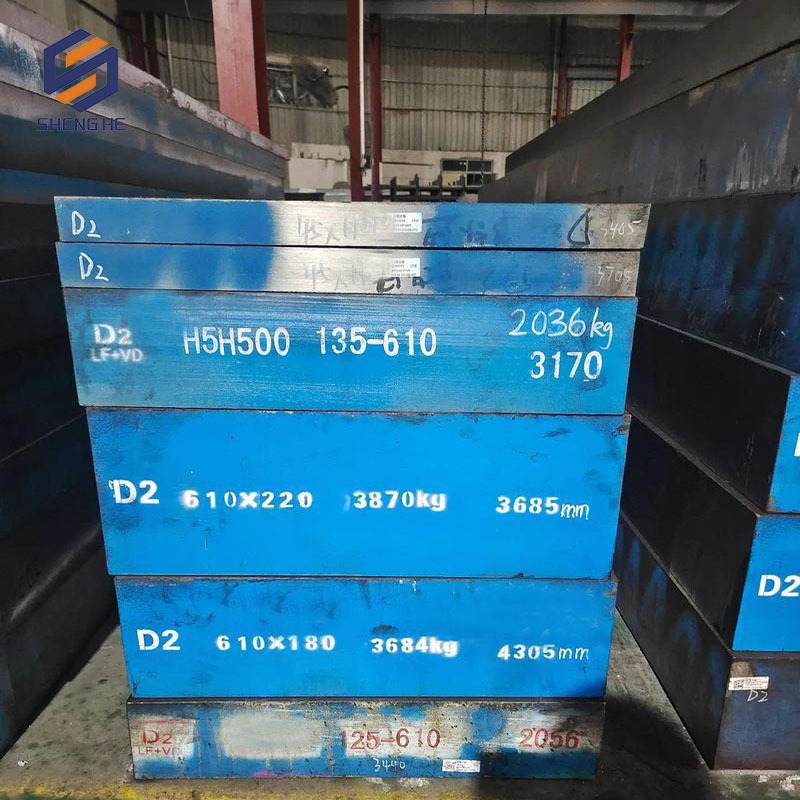
Procurement teams must evaluate suppliers rigorously. Supply formats dictate rough machining times. List standard availability in your buying specs. Suppliers offer round bars and flat bars commonly. Pre-machined plates save toolmakers hundreds of hours. Precision-ground flat stock reduces initial setup requirements drastically. Choose the format closest to your final tool dimensions.
Always account for decarburization layers when ordering raw blocks. Order material slightly oversized to allow for clean-up machining. The outer skin often lacks the required carbon content due to mill processing.
Quality and compliance verification protects your investment. You cannot afford internal defects in large tooling blocks.
Advise buyers to mandate Ultrasonic Testing (UT).
Specify the SEP 1921 standard for ultrasonic inspection.
Ensure internal soundness before any machining begins.
Check for material test reports (MTRs) meticulously.
Verify exact chemical breakdowns and certified hardness capabilities.
Understand the standard versus premium (ESR) debate. Explain when it makes sense to pay a premium. Electro-Slag Remelted (ESR) material costs significantly more per kilogram. ESR processing removes harmful non-metallic inclusions. It creates a highly pure, isotropic steel structure. The material performs uniformly in all directions. Buy ESR material when tooling failure costs far exceed the raw material price increase. Premium purity minimizes micro-cracking risks in highly stressed die corners.
This guide highlights the true potential of high-carbon tooling materials. It stands as the industry standard for high-wear resistance. It delivers exceptional lifespan in high-volume stamping and blanking runs. However, engineering teams must account for its inherent toughness limits. Proper heat treatment remains non-negotiable for dimensional stability. You must control EDM layers and retained austenite carefully.
Here are your actionable next steps. Review your current tool failure modes carefully. Identify if abrasive wear or chipping causes your downtime. Consult your metallurgist regarding sub-zero heat treatment cycles for stability. Reach out to your trusted supplier for a material availability quote based on your specific size and tolerance requirements today.
A: No. Despite containing up to 12% chromium, it is not corrosion-resistant enough to be classified as stainless steel. The high carbon content ties up most of the chromium in carbides. It will rust in humid environments without protective oil.
A: The typical working hardness ranges between 58 and 62 HRC. While you can achieve higher hardness levels, doing so drastically increases brittleness. A hardness above 62 HRC often leads to premature chipping and catastrophic tool failure under load.
A: Welding poses a high risk of cracking due to the extreme hardenability. It requires strict pre-heating procedures, specific high-alloy filler materials, and immediate post-weld stress relieving. You should avoid welding it unless absolutely necessary for tool repair.
A: They are essentially the exact same chemical composition. They simply fall under different regional standard systems. 1.2379 is the German DIN EN ISO standard designation. D2 is the American AISI standard designation. They are interchangeable in procurement.


