
Views: 0 Author: Site Editor Publish Time: 2026-08-22 Origin: Site


Many manufacturing teams ask whether one steel grade inherently outperforms another when designing durable parts. However, stating one material is universally superior ignores how specific mechanical purposes dictate your final material selection. Neither option wins every battle across the factory floor. You face a classic engineering trade-off between distinct performance categories. The clash usually boils down to extreme wear resistance versus high-impact toughness. Choosing the wrong alloy often leads to catastrophic part failure, unexpected machinery downtime, or rapid tooling degradation. We will provide a clear evaluation framework to help engineers, machinists, and procurement teams specify the exact material needed. You will learn how to weigh application criteria against fabrication risks efficiently. Ultimately, you can confidently navigate this metallurgical divide to ensure optimal structural or tooling performance for your next major engineering project.
D2 Tool Steel is the superior choice for high-wear, abrasive applications requiring high hardness (up to 62 HRC), such as stamping dies and cutting tools.
4140 Engineering Steel is the optimal choice for structural components requiring high tensile strength, fatigue resistance, and impact toughness, such as gears, shafts, and automotive parts.
Machinability & Fabrication: 4140 is significantly easier to machine and weld; D2 requires specialized tooling and strict heat-treatment protocols to avoid cracking.
Decision Rule: Specify D2 to hold a sharp edge or resist abrasion; specify 4140 to bear heavy, repetitive structural loads without catastrophic failure.
Metallurgical classifications separate these two metals entirely. They belong to completely different alloy families designed to solve different industrial problems. You must understand their basic chemical profiles before comparing complex performance metrics. Making a choice based solely on price or availability often leads to severe mechanical consequences down the line. We classify one as a specialized tool steel, while the other serves as a versatile structural backbone.
We classify D2 Cold Work Tool Steel as a high-carbon, high-chromium alloy. It boasts approximately 1.5% carbon and 12% chromium. This specific chemistry creates massive, complex chromium carbides during the heat treatment process. Industry professionals designate it as a "cold work" steel because engineers use it primarily for applications operating below 400 degrees Fahrenheit. Its primary success criteria include exceptional dimensional stability during hardening processes. It resists warping or shrinking when quenched. Furthermore, it delivers supreme abrasion resistance in harsh environments. Manufacturers rely on it when tools must retain their exact shape under extreme, repetitive friction. You will frequently find it utilized in stamping plants where dies shape millions of metal sheets over their lifespan.
Conversely, standard structural alloys fill an entirely different niche. 4140 Engineering Steel represents a versatile chromium-molybdenum alloy. It features a much lower carbon content, hovering around 0.40%. This specific carbon level hits a critical sweet spot in metallurgy. The addition of molybdenum enhances the metal's hardenability while maintaining excellent core ductility. This composition provides a highly balanced mechanical profile. It prioritizes overall tensile strength, flexibility, and exceptional resistance to torsional fatigue. You will see it thrive in applications where parts endure twisting, bending, and heavy impacts constantly. It rarely fractures under dynamic stress, making it an incredibly safe choice for moving machinery components.
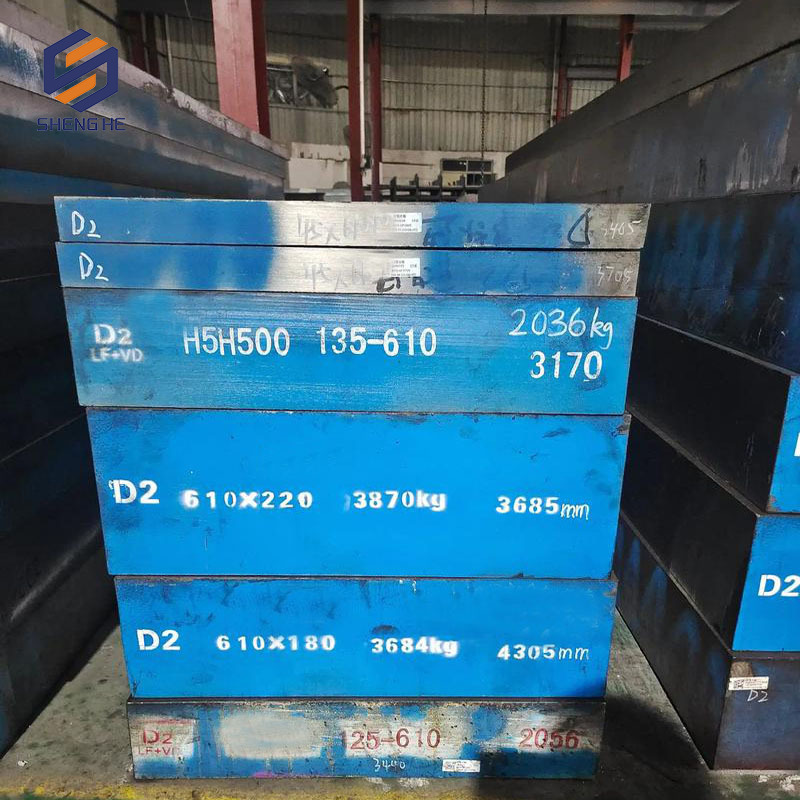
The most pronounced difference emerges when we examine surface hardness. D2 tool steel excels tremendously here due to its massive internal carbide volumes. It easily reaches impressive hardness levels of 55 to 62 HRC after proper heat treatment. This extreme hardness makes it virtually impenetrable to abrasive wear. It cuts through softer metals without losing its edge. In sharp contrast, 4140 typically maxes out around 54 HRC even under optimal quenching conditions. However, industry professionals rarely push it to this maximum limit. They often use it in a pre-hardened state ranging from 28 to 32 HRC. We can clearly see the superiority of high-chromium alloys in abrasive environments. If your part rubs against rough materials continuously, standard structural steel will wear down rapidly.
Extreme hardness usually comes at a steep cost to overall toughness. We must acknowledge a critical vulnerability inherent to high-carbon tool steels: severe brittleness. If you subject a fully hardened piece to high-impact shock, it will likely chip or shatter. It simply cannot absorb sudden, heavy blows effectively. This is exactly where our structural alloy asserts its undeniable dominance. It possesses the remarkable ability to absorb massive impact energy without cracking. It resists catastrophic fracture under severe dynamic loads. When you need parts to flex slightly under pressure and spring back rather than snap in half, the lower-carbon option wins every single time. Engineers measure this capability using Charpy V-notch testing, which proves the structural steel absorbs significantly more joules of energy before failing.
Machinability ratings heavily influence shop floor decisions and production schedules. We generally rate our structural alloy at roughly 65% of the standard B1112 baseline. It cuts predictably, forms easily, and leaves a clean surface finish. Machinists enjoy working it. Meanwhile, the high-chromium alternative scores a much lower rating, typically lingering around 25% to 30%. Machining this stubborn alloy introduces major hidden operational hurdles. It consumes expensive cutting tools rapidly. Operators must utilize significantly slower feed rates. They must apply precise, high-pressure coolant strategies to prevent work hardening. If a tool dwells too long on the surface, the metal glazes over. This ruins the cutting insert instantly. You will inevitably face increased total production time when shaping it. Shops must account for these extended machining hours when bidding on new manufacturing projects.
Transforming raw metal into a functional component involves significant thermal processing. How a material responds to extreme heat often dictates its suitability for specific manufacturing environments. We must look closely at how these alloys behave during hardening and welding procedures.
Thermal processing dictates the final mechanical success of these metals. High-carbon tool steels demand strict atmospheric controls during hardening to prevent surface decarburization. We must utilize complex double-tempering cycles to prevent retained austenite from compromising the part. Retained austenite causes unpredictable dimensional changes. It slowly transforms into brittle untempered martensite at room temperature. If you rush this delicate process or skip the second temper, the material risks severe internal cracking later. You need specialized vacuum furnaces and deep metallurgical knowledge to process it correctly. Common mistakes include pulling the part from the furnace too quickly, causing thermal shock.
On the other hand, the chromium-molybdenum alloy relies on a relatively straightforward quench and temper process. Standard heat-treating facilities handle it efficiently every day. You heat it to the critical temperature, quench it rapidly in oil, and temper it to the desired hardness. This forgiving nature reduces scrap rates significantly. It ensures consistent results even across large production batches.
Fabricators frequently ask about joining these materials to other structural frames. We state this reality clearly: high-carbon tool steel is notoriously difficult to weld. The elevated carbon and chromium levels promote rapid, severe weld-zone cracking. The heat affected zone transforms into brittle martensite almost instantly. You must apply extreme pre-heating and aggressively slow cooling to stand any chance of success. Most engineers avoid welding it entirely unless absolutely necessary for emergency repairs.
Conversely, you can weld the lower-carbon structural alloy quite successfully. While it still requires care compared to mild steel, it responds well to standard pre-heat protocols. Fabricators use post-weld stress relief procedures to restore the material's integrity. This essential flexibility makes it ideal for complex structural assemblies, custom brackets, and heavy machinery frames.
When choosing between these distinct alloys, we recommend using a direct decision matrix for shortlisting. You should select your material based directly on how the part will eventually fail in service. We have organized the most common industrial applications into logical categories to guide your specification process.
If your component fails primarily by wearing down, losing its sharp edge, or galling, you need maximum hardness. Here are the situations when you should specify high-chromium tool steel:
Blanking, stamping, and forming dies: These crucial tools undergo intense, repetitive friction. They must retain highly precise dimensions over millions of manufacturing cycles to prevent part defects.
Shear blades and slitting cutters: Industrial cutting equipment requires a razor-sharp, enduring edge to slice through softer sheet metals continuously without dulling.
High-wear injection molds: Abrasive glass-filled plastics quickly erode softer mold cavities. Extreme surface hardness becomes absolutely mandatory to maintain molded part tolerances.
If your component fails primarily by bending, twisting, or shattering under sudden loads, you need maximum toughness. Here are the scenarios when you should specify dependable Engineering Steel:
Power transmission shafts, axles, and gears: These dynamic components endure constant rotational torque. They frequently absorb sudden stops and intense mechanical shock during machinery operation.
Heavy-duty structural mounts and brackets: The supporting material must carry immense static and dynamic loads safely without experiencing sudden, catastrophic fracture.
Tool holders and heavy fixtures: In these supportive devices, operators prioritize massive overall toughness over localized surface hardness to ensure shop floor safety.
To make this shortlisting logic completely actionable, we provide the following technical comparison chart. It summarizes the core parameters engineers evaluate daily.
Evaluation Parameter | High-Carbon Tool Steel (D2) | Chromium-Moly Steel (4140) |
|---|---|---|
Primary Failure Resistance | Abrasive wear and edge dulling | Fatigue, impact, and fracture |
Typical Heat Treated Hardness | 55 to 62 HRC | 28 to 32 HRC (Up to 54 HRC max) |
Machinability Rating | Poor (25-30% of standard) | Good (65% of standard) |
Welding Difficulty | Extremely High (Cracking risk) | Moderate (Standard protocols work) |
Best Use Case | Cutting tools, dies, molds | Shafts, gears, structural parts |
Our final verdict reveals that "better" depends entirely on your specific engineering environment. You must determine whether the primary failure mode of the part is wear and abrasion or fracture and fatigue. High-carbon tool steel reigns supreme when dealing with intense friction. Meanwhile, the chromium-molybdenum alloy dominates applications requiring structural resilience.
To ensure project success, take the following actionable next steps:
Review your exact load requirements and identify the most likely cause of future component failure.
Consult with an experienced metallurgist or trusted material supplier to discuss your shop's machining capabilities.
Request physical test samples or detailed quotes for your shortlisted grade before committing to a massive production run.
A: 4140 makes excellent impact weapons like swords or axes due to its incredible toughness and shock absorption. However, D2 remains vastly superior for smaller, everyday carry knives. It provides exceptional edge retention and high hardness, ensuring the blade stays sharp through repetitive cutting tasks where structural steel would dull quickly.
A: Yes, D2 generally carries a higher raw material cost. This stems from its massive 12% chromium content and complex manufacturing process. Furthermore, you must account for significantly higher machining expenses and specialized heat-treating costs. Processing high-carbon alloys takes more time and consumes expensive tooling rapidly.
A: No, D2 is widely considered "semi-stainless" because it contains between 11% and 13% Chromium. This unique chemistry offers much better natural corrosion resistance than standard structural alloys. However, neither metal is fully stainless. Both will eventually rust if you leave them exposed to moisture without proper oiling or protective coatings.
A: No. While you can harden structural alloys via aggressive quenching or specialized surface treatments like nitriding, their fundamental chemical composition falls short. They physically cannot match the immense through-hardness and dense carbide structure of high-carbon tool steels. Their lower carbon limits their maximum possible hardness ceiling.


