
Views: 0 Author: Site Editor Publish Time: 2026-08-30 Origin: Site


Procurement managers and mechanical engineers often face a frustrating daily dilemma. A critical manufacturing blueprint strictly specifies one tool steel grade, but local suppliers only offer an alternative they claim is perfectly equivalent. You might wonder if accepting the substitute will compromise your production line. Both are high-carbon, high-chromium cold work tool steels heavily favored for their extreme durability. However, they originate from entirely different regional frameworks—JIS for the Japanese market versus ASTM for North America. Sorting through these overlapping material specifications is crucial to avoid catastrophic tooling failures or delayed project timelines. This article will thoroughly demystify the metallurgical realities separating these two prominent grades. We will evaluate real-world performance metrics, focusing on wear resistance and impact toughness. Finally, you will receive a strict decision framework to confidently substitute or specify either steel for your next tooling project.
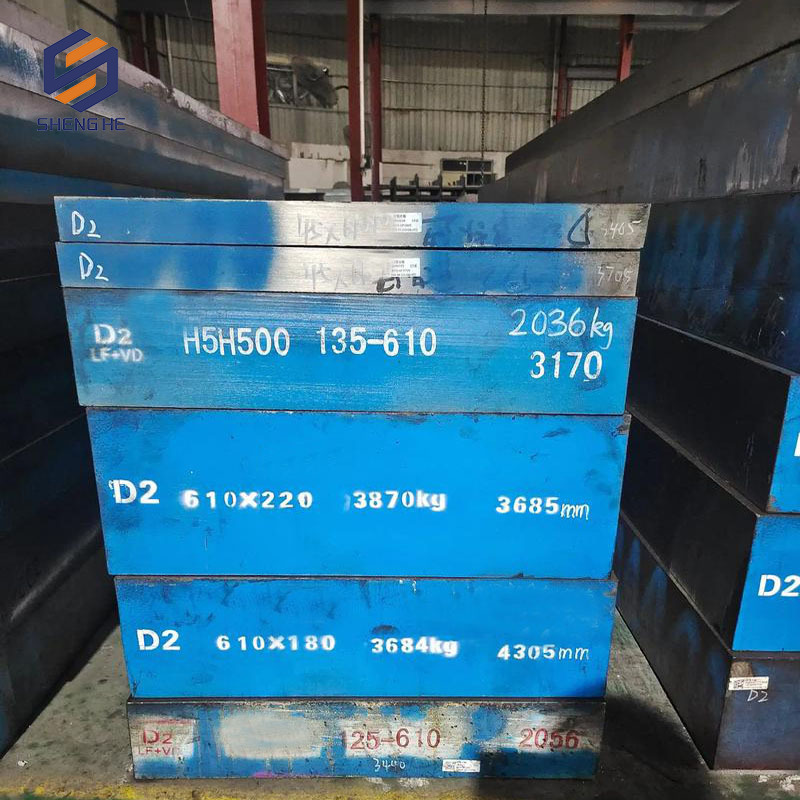
SKD11 (JIS) and D2 steel (ASTM) are nearly identical in chemical composition and are often used interchangeably in global manufacturing.
The primary differences lie in minor chemical tolerance limits (specifically Molybdenum and Vanadium) dictated by their respective regional standards.
Real-world performance (wear resistance, toughness, edge retention) is dictated more by the specific mill's quality control and the heat treatment process than by the badge of SKD11 or D2.
Procurement decisions should be driven by geographic availability, supply chain reliability, and compliance with OEM specifications rather than expected performance gaps.
To understand the debate between these materials, you must look through the regional standardization lens. The Japanese Industrial Standards (JIS) govern SKD11 under the JIS G4404 framework. Conversely, the American Society for Testing and Materials (ASTM) defines D2 steel under the ASTM A681 specification. Globally, you will also see equivalents like DIN 1.2379 in Europe or GB Cr12MoV in China. These varying designations describe materials engineered to solve the exact same industrial problems.
At their core, both alloys rely on an extreme chemical makeup designed to maximize hardness and wear resistance. Carbon and Chromium dominate the matrix. The high carbon content (typically 1.4% to 1.6%) allows the formation of martensite during heat treatment, ensuring high baseline hardness. The immense chromium content (roughly 11% to 13%) provides heavy wear resistance and grants the steel semi-stainless properties.
When you analyze the micro-differences, you will notice slight variations in minor alloying elements. The JIS standard often maintains slightly tighter controls on Molybdenum (Mo) and Vanadium (V) compared to older ASTM revisions. However, the exact allowable ranges heavily overlap. Molybdenum improves deep hardening capabilities, while Vanadium refines the grain structure to prevent brittleness.
Element | JIS G4404 (SKD11) | ASTM A681 (D2) | Primary Function |
|---|---|---|---|
Carbon (C) | 1.40% - 1.60% | 1.40% - 1.60% | Drives peak hardness and martensite formation. |
Chromium (Cr) | 11.00% - 13.00% | 11.00% - 13.00% | Forms hard carbides; provides moderate corrosion resistance. |
Molybdenum (Mo) | 0.80% - 1.20% | 0.70% - 1.20% | Increases hardenability and high-temperature strength. |
Vanadium (V) | 0.20% - 0.50% | 0.50% - 1.10% (Varies by mill) | Refines grain size; improves wear resistance. |
A common misconception plagues machining forums and procurement departments: the belief one grade is universally superior. This is factually incorrect. Modern metallurgy has advanced significantly. Today, many premier steel mills melt and pour a single, highly refined batch of tool steel. Because the chemical requirements of JIS and ASTM intersect so heavily, mills deliberately aim for the center of the tolerance window. They then dual-certify the exact same plate or round bar to meet both standards simultaneously.
Theoretical chemistry only matters when it translates to shop floor performance. When evaluating these alloys, engineers focus on three primary metallurgical traits: hardness, impact toughness, and corrosion resistance. Because the microstructures are nearly identical, you can expect overlapping performance metrics.
Both steels readily achieve a working hardness between 58 and 62 HRC. This exceptional hardness stems from the massive volume of primary chromium carbides distributed throughout the steel matrix. These blocky, ultra-hard carbides act like microscopic cobblestones. They resist abrasive wear effortlessly, making SKD11 Cold Work Tool Steel an elite choice for high-friction applications where materials slide against the tool surface under immense pressure.
Metallurgy always demands a compromise. The same massive carbides providing extreme wear resistance also create inherent vulnerabilities. You must frame this as a strict trade-off: high wear resistance directly reduces impact toughness. Neither material excels under heavy shock loading. If you strike them repeatedly with high impact forces, the edges will chip rather than roll. They possess poor shock resistance compared to dedicated shock-resisting steels (like S7) or high-speed steels (like M2). You should never design a high-impact battering tool from these grades.
End-users frequently complain about rust, particularly in consumer knife making or humid industrial stamping plants. A persistent myth labels these materials as stainless. The reality is quite different. True stainless steels require a minimum of 13% free chromium suspended in the solid solution. While both grades contain roughly 12% total chromium, the high carbon content ties up much of this chromium to form carbides. This leaves the surrounding matrix depleted of free chromium. Neither steel qualifies as true stainless. Both demand routine maintenance, proper lubrication, and moisture control to prevent surface oxidation.
Keep tools oiled: Apply a light coat of machine oil or rust preventative during storage.
Control shop humidity: Maintain climate-controlled environments for expensive die sets.
Clean post-production: Remove acidic residues or coolants immediately after a production run.
Since the mechanical properties overlap almost entirely, your selection process must pivot toward specific application requirements. Engineers deploy these materials across heavy industry, recycling sectors, and consumer goods.
In the metal stamping and cold forging sectors, these alloys remain the undisputed industry standards. Tool and die makers choose them for long-run stamping dies, complex thread rolling dies, and precision blanking tools. When producing millions of stamped steel parts, dimensional stability is paramount. The high wear resistance ensures the die geometry remains intact, keeping final part tolerances tight over long production campaigns.
Recycling facilities utilize heavy-duty granulators to shred tough materials. Plastic crusher blades and industrial knives often rely on these high-carbon grades. The edge retention of D2 Cold Work Tool Steel performs exceptionally well when slicing through thick polymers or non-ferrous scrap. However, operators face a specific risk here. Because crushing involves moderate impact, a poorly executed tempering process will lead to catastrophic micro-chipping along the cutting edge. The heat treater must carefully balance peak hardness against necessary toughness to survive the shredding environment.
The consumer pocket knife market holds strong opinions on blade steel. Everyday Carry (EDC) enthusiasts praise the edge retention but frequently complain about the difficulty of sharpening. Because of the massive chromium carbides, sharpening requires diamond or CBN stones rather than traditional aluminum oxide. Interestingly, the consumer market perceives minor performance differences based on branding. Custom knife makers, however, treat the Japanese and American designations identically, focusing entirely on their proprietary heat treatment recipes to extract maximum performance.
Analyze the wear mechanism: Choose these grades for sliding abrasive wear, not impact battering.
Calculate production volume: High volumes justify the higher raw material and machining costs.
Determine maintenance capacity: Ensure the facility can manage the rust-prevention requirements.
You can purchase the cleanest, most expensive tool steel in the world, but poor thermal processing will render it useless. Heat treatment always trumps the spec sheet. The choice of furnace technology and the precision of the tempering cycles dictate the final performance far more than the steel's country of origin.
Modern tool makers rely on vacuum furnace hardening for these grades. Vacuum environments prevent surface decarburization, ensuring the tool retains maximum hardness at its outer edges. The austenitizing temperature typically ranges from 1010°C to 1040°C. Following the quench, double tempering is absolutely mandatory. Single tempering leaves too much retained austenite in the structure, which eventually transforms into untempered martensite, causing the tool to crack spontaneously while sitting on a shelf. Many premium tool makers also employ deep cryogenic treatments between tempering cycles to fully stabilize the microstructure.
Machinists widely dislike working with these materials in their fully hardened state. The large, coarse carbides aggressively attack cutting tools. You will experience rapid tool wear during hard turning or milling operations.
Implementation risks peak during the final grinding phase. Grinding either steel post-heat-treatment requires meticulous attention. You must use appropriate grinding wheels (often CBN) and flood the workpiece with coolant. If the grinding operator pushes too hard, localized friction heat will cause "grinding scorch." This phenomenon ruins the surface temper, dramatically lowering the hardness of the cutting edge and inducing microscopic surface cracks that lead to early failure.
Both materials exhibit phenomenal predictability during heat treatment. Because they are air-hardening or vacuum-hardening steels, they require a much gentler quench than water or oil-hardening grades. This gentle cooling cycle results in minimal distortion and low internal stress. Tool designers love this dimensional stability. It allows them to machine complex, tight-tolerance die shapes in the soft state, knowing the tool will barely warp during the hardening process.
When engineering performance is equal, procurement strategy takes over. Purchasing decisions should heavily weight geographic availability, lead times, and regulatory compliance.
The global steel supply chain dictates pricing and availability based on region. If your manufacturing facility sits in the Asia-Pacific region, the JIS standard acts as the default. Local distributors stock vast quantities of it, making it highly cost-effective and available for next-day delivery. Conversely, in North America, the ASTM standard dominates warehouse floors. Attempting to source the Japanese designation in Ohio will incur unnecessary freight costs and extended lead times. You should always buy the grade native to your production geography.
Dealing with strict engineering blueprints requires a formal approach. If an Original Equipment Manufacturer (OEM) specifies one grade exclusively, you cannot simply swap it without approval. You must initiate a formal material substitution request. To succeed, ask your supplier for the Mill Test Certificates (MTC) for the proposed alternative. Submit these certificates to the engineering team. Because the chemical alignment is nearly perfect, engineers routinely approve these deviations once they see the certified chemistry on paper.
Focus your vendor selection on supply chain reliability. Choose based on local availability and the reputation of the steel distributor. The market suffers from gray-market materials melted with poor quality control. Cheap, poorly smelted steel contains high levels of sulfur and phosphorus inclusions, which act as crack-initiating stress risers. Verifying you have clean, well-smelted steel from a reputable mill is infinitely more important than debating minor differences in the standard designation.
Ultimately, these two designations serve as equivalent solutions for the same demanding industrial problems in cold work applications. Whether you need long-lasting stamping dies, aggressive shredder blades, or durable industrial knives, both alloys deliver exceptional wear resistance and adequate toughness when processed correctly.
Your engineering and purchasing teams should stop agonizing over the regional letters on the spec sheet. Instead, focus your rigorous evaluation on the quality of your heat treatment partner and the metallurgical cleanliness of the supplying steel mill. A perfectly heat-treated substitute will vastly outperform a poorly processed exact match.
Moving forward, audit your blueprints. Consult with your local metallurgist or tooling supplier to determine which grade offers the best localized availability and lead time for your specific manufacturing footprint.
A: Yes, in 99% of cases you can substitute them freely. Their chemical compositions and performance profiles are functionally identical for cold work applications. However, if you manufacture parts under strict OEM contracts, you must obtain formal engineering approval by submitting a Mill Test Certificate showing structural alignment.
A: No, neither material holds an advantage in corrosion resistance. They share functionally identical chromium content (around 11-13%). Because high carbon levels consume the chromium, both remain semi-stainless and will absolutely rust if exposed to moisture, acids, or humidity without protective lubrication.
A: Both exhibit poor machinability compared to lower-carbon tool steels. Their massive, coarse chromium carbides rapidly wear down standard cutting tools. Achieving a good surface finish requires rigid machine setups, premium carbide or CBN inserts, and full annealing prior to rough machining.
A: M2 high-speed steel offers significantly higher red hardness and superior impact toughness, making it ideal for high-speed cutting tools that generate extreme friction heat. Conversely, these cold-work grades are optimized strictly for low-temperature wear resistance and cost efficiency in die applications.


