
Views: 0 Author: Site Editor Publish Time: 2026-10-21 Origin: Site


Picture a bustling injection molding shop floor. A high-volume run suddenly grinds to a halt. Parts are warping upon ejection. Cycle times are creeping upward, yet the machine shows no obvious faults. More often than not, this unexplained drop in efficiency traces back to an invisible enemy: rust accumulating deep inside the mold's internal cooling channels.
Working with inherently corrosive plastics like Polyvinyl Chloride drastically elevates the risk of severe mold degradation. Under these harsh operating conditions, standard mold steels deteriorate rapidly. The resulting oxidation leads to costly unplanned downtime, frequent maintenance interventions, and premature tool replacement.
Addressing this challenge requires a systemic metallurgical solution rather than a temporary surface fix. Engineered specifically for corrosive environments, 1.2316 stainless tool steel emerges as the optimal choice. This material provides inherent resistance to the acidic byproducts of PVC processing. In this comprehensive guide, we will explore the mechanical reasons behind cooling channel failure, the unique chemical challenges posed by PVC, and why upgrading your material selection is a fundamental step for maintaining long-lasting, highly efficient molds.
Cooling Efficiency is Critical: Rust and mineral scale buildup inside cooling channels act as severe thermal insulators. This drastically increases cycle times and reduces overall manufacturing profitability.
PVC Demands Special Steel: Heating PVC during the molding process releases highly corrosive hydrochloric acid gas, which actively attacks, degrades, and pits standard mold steels.
The Power of High Chromium: The 1.2316 grade is a pre-hardened, high-chromium stainless tool steel specifically engineered for superior, long-lasting corrosion resistance.
Better than Surface Plating: Unlike chrome-plated standard steels, high-alloy stainless steel offers full-body corrosion resistance, meaning internal cooling channels are protected from the inside out.
ESR Option for High Polish: For medical devices or high-gloss PVC applications, the Electro-Slag Remelting version provides unmatched metallurgical purity and optical-grade polishability.
Think of your cooling channels as the thermodynamic engine of the mold. In a typical operation, the cooling phase eats up to 70 percent of the total cycle time. To maximize production efficiency, designers engineer complex networks of internal channels. These waterways circulate coolant to rapidly draw heat away from the molten plastic, solidifying the part.
However, this constant flow of water creates a naturally hostile environment for steel. The continuous presence of moisture, dissolved oxygen, and fluctuating pH levels creates the perfect storm for rapid condensation and oxidation. The stark temperature differential between the 200-degree plastic and the chilled coolant only accelerates this reaction. The internal walls of these waterways remain perpetually wet, making them highly susceptible to rust formation if you select an inadequate tooling material.
The physical consequences of rust go far beyond mere discoloration. It becomes a matter of thermal dynamics. Standard steel oxidizes quickly under these conditions. Iron oxide and mineral scale form on the inner walls, acting as a stubborn thermal barrier.
Shop floor data proves that just a microscopic 0.1mm layer of scale drops the steel's thermal conductivity by up to 40 percent. Consequently, this degradation creates a severe ripple effect across the production floor. Poor thermal transfer leads to localized hot spots within the mold cavity. Operators are then forced to extend cooling times to prevent parts from shrinking unevenly or warping upon ejection. Longer cycle times directly translate to fewer parts produced per hour, ultimately causing a massive loss in production revenue and overall equipment effectiveness.
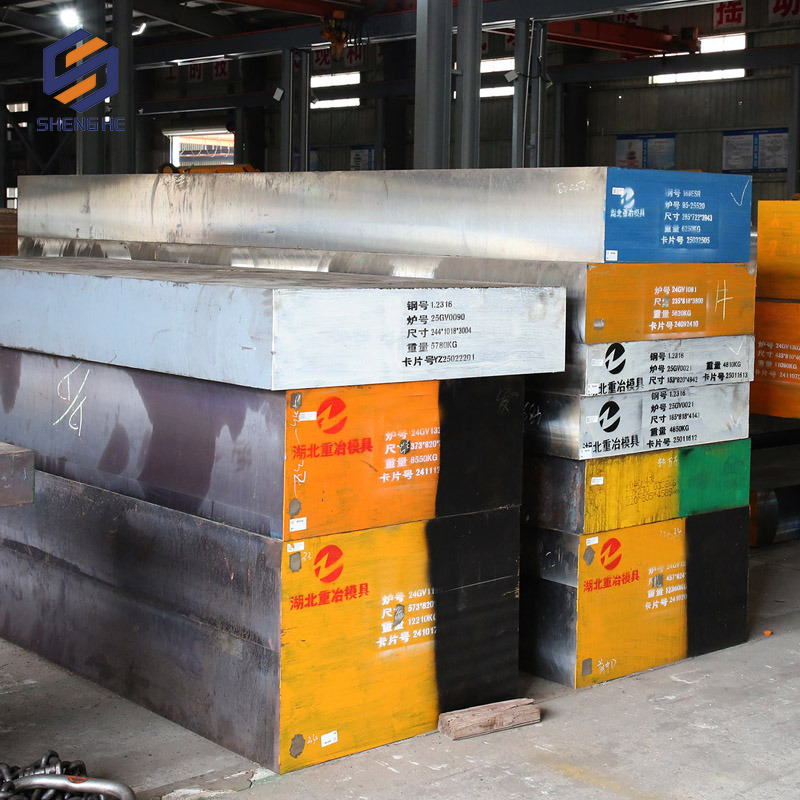
Polyvinyl Chloride remains a workhorse thermoplastic. Manufacturers favor it for its durability and cost-effectiveness in construction, plumbing, and consumer goods. Yet, its chemical composition presents a severe challenge for toolmakers. When PVC is heated to its melting point during the injection molding process, thermal degradation inevitably begins.
This heating process releases trace amounts of hydrochloric acid gas. This highly aggressive compound seeps into every microscopic crevice, parting line, ejector pin clearance, and vent of the mold. In a high-temperature, high-pressure environment, the acidic gas actively attacks the iron matrix of the mold steel. It forms liquid acid the moment it meets the cooler surfaces of the tool.
Common injection mold steels, such as P20 or 1.2738, offer excellent machinability and toughness. Unfortunately, they completely lack the chemical makeup necessary to withstand acidic attacks. When exposed to PVC off-gassing, these standard base metals fail miserably. They develop severe surface pitting, dimensional wear, and edge degradation in a matter of weeks.
Historically, toolmakers attempted to solve this by applying surface treatments like hard chrome or electroless nickel plating. While this provides a temporary barrier, plating remains fundamentally flawed as a long-term solution. Plating layers are micro-cracked by nature. They cannot reach deep into complex, cross-drilled cooling channels. Furthermore, the thermal expansion mismatch between the steel substrate and the plating layer causes the coating to flake or scratch at the parting line. Once breached, galvanic corrosion accelerates the hollowing out of the underlying steel. This harsh reality dictates the absolute necessity for a true corrosion-resistant mold steel that provides structural integrity throughout the entire block.
Recent market analyses indicate a definitive shift in the injection molding sector. Global manufacturing demands tighter tolerances, thinner wall sections, and faster turnarounds. As a result, the industry's tolerance for unplanned downtime has vanished. Toolmakers are actively abandoning cheaper traditional base metals. Instead, there is a massive migration toward specialized, pre-hardened stainless alloys.
This pivot is largely driven by the adoption of intricate conformal cooling channels. Modern tool designs feature complex, deeply drilled networks designed to follow the exact geometry of the part. These channels are nearly impossible to clean or maintain if severe oxidation occurs. Investing upfront in high-chromium alloys is now a baseline engineering requirement for remaining competitive in high-volume, corrosive plastic processing.
To combat the dual threats of internal cooling channel rust and external PVC acid attacks, metallurgists developed specific stainless tool steels. The effectiveness of 1.2316 plastic mould steel lies in its precise, highly engineered chemistry. It operates as a martensitic stainless tool steel characterized by its high chromium and moderate molybdenum content.
Element | Percentage (%) | Function in the Alloy |
|---|---|---|
Carbon (C) | 0.33 - 0.45 | Provides baseline hardness and wear resistance. |
Chromium (Cr) | 15.00 - 17.00 | Forms a passive oxide layer, granting exceptional rust resistance. |
Molybdenum (Mo) | 0.80 - 1.20 | Enhances resistance to pitting and localized acid attacks. |
Manganese (Mn) | ≤ 1.50 | Improves toughness and hardenability. |
The robust chromium content allows the steel to form a microscopic, self-healing passive oxide layer on its surface. This invisible shield acts as a physical barrier against moisture and acidic gases. Specifically, the addition of molybdenum significantly enhances the steel's resistance to localized pitting corrosion. This is the exact type of damage inflicted by the hydrochloric acid released from PVC.
Beyond chemical makeup, this material is typically delivered in a pre-hardened condition, ranging between 280 and 325 HB. Because it arrives already hardened at the mill, toolmakers bypass subsequent heat treatments. This eliminates the risk of dimensional distortion, scaling, or cracking associated with the intense quenching process.
Because tooling supply chains operate globally, recognizing this material by its international designations ensures accurate sourcing. While DIN 1.2316 is widely recognized, it is formally known in the EN standard as X38CrMo16. It also shares traits with modified AISI 420 grades found in North American markets. However, the specific molybdenum addition makes 1.2316 distinctively superior for pitting resistance.
The primary advantage of utilizing a high-alloy stainless tool steel is systemic protection. The entire block of steel shares the exact same chemical composition. Therefore, the bare metal inside the deep, drilled cooling channels remains just as protected as the highly polished cavity surface.
When you specify this grade for your core and cavity blocks, the internal waterways naturally resist oxidation caused by constant coolant flow. It is physically impossible to effectively chrome-plate the inside of a long, intersecting drilled waterline. 1.2316 eliminates this vulnerability entirely. It negates the need for complex internal plating processes or the continuous dumping of aggressive chemical rust inhibitors into your facility's water system.
Keeping cooling channels free of rust and scale ensures predictable thermal transfer throughout the mold's entire lifecycle. Consider a practical production scenario. A manufacturer builds a high-volume PVC pipe fitting mold using standard P20 steel. Initially, it runs a profitable 25-second cycle time. Six months later, internal channel rusting acts as an insulator. The operator must extend the cooling phase to 30 seconds to prevent part warpage.
In contrast, machining the exact same mold from 1.2316 keeps the internal waterways clean and thermally efficient. The cycle time remains locked at 25 seconds for years. Maintaining optimal cooling efficiency translates into millions of additional parts produced over the tool's lifespan. This massive return on investment easily dwarfs the initial higher cost of the premium steel.
When selecting stainless mold steels, engineers frequently compare 1.2316 against 1.2083. While both provide excellent corrosion resistance due to high chromium levels, their applications differ significantly based on their delivery condition.
Grade 1.2083 is typically supplied in an annealed state. Machinists must rough it, finish it, and then send it out for vacuum quenching and tempering to achieve its final working hardness. This intense heat treatment introduces immense thermal stress. It risks dimensional changes, warpage, or cracking in large blocks. 1.2316 arrives pre-hardened and ready to machine. For large automotive bumpers, complex pipe-fitting tools, or any application where dimensional stability is paramount, 1.2316 proves to be the structurally safer choice.
For budget-conscious projects, some molders attempt to use P20 steel coated with hard chrome. While the upfront material cost of P20 is undeniably lower, the total cost of ownership quickly escalates. As established, plating cannot protect deep, intersecting cooling channels. Once rust forms internally, cooling efficiency plummets. The expenses associated with applying the plating, stripping and re-plating the mold, and the lost production time quickly eclipse the initial savings. For long-term production runs, investing in a solid, unplated PVC tooling steel remains the undisputed champion for reliability.
While standard 1.2316 is manufactured using conventional electric arc furnace melting, highly demanding applications require an upgraded version known as 1.2316 ESR. Electro-Slag Remelting is an advanced secondary refining process. During this procedure, a solid steel ingot is slowly remelted drop by drop through a pool of chemically reactive liquid slag.
This slag acts as a rigorous microscopic filter. It absorbs non-metallic inclusions, sulfur, and phosphorus. The result is a steel ingot with a highly homogeneous, directional micro-structure. The ESR process drastically reduces porosity, resulting in a tougher steel capable of achieving a significantly higher degree of surface finish.
Tooling engineers specify the ESR upgrade when the aesthetic or functional requirements of the molded part leave no room for error. Standard material can be polished to a very good finish. However, microscopic inclusions inherent in conventionally melted steel can cause pinholing or orange peel effects under extreme polishing.
The ESR variant is strictly required for transparent PVC parts, such as clear medical tubing connectors or fluid housings where any mold defect causes visual distortion. It is also essential for medical devices requiring strict hygiene standards, and high-gloss consumer goods demanding a flawless, mirror-like finish directly out of the mold.
Because this material is highly alloyed, contains a high volume of chromium carbides, and is delivered pre-hardened, it presents higher machining resistance than standard annealed steels. Toolmakers should observe specific shop-floor guidelines to maximize efficiency.
Utilize high-quality coated carbide inserts designed specifically for hard milling. Due to the high chromium content, the steel has a tendency to work-harden if cutting parameters are incorrect. Maintain consistent feed rates and avoid dwelling the tool in one spot. Ensure the CNC machine and work-holding setups are extremely rigid to prevent chatter, which rapidly degrades tool life. Finally, use high-pressure, water-soluble coolants to evacuate chips quickly and manage the significant heat generated during cutting.
A common misconception on the shop floor is that stainless steel means stain-proof steel. While the alloy offers exceptional resistance to PVC gases and water, it can still oxidize under extreme neglect. Maintaining basic mold hygiene remains vital for longevity.
Before removing the tool from the injection press for storage, operators must thoroughly blow out all cooling channels with compressed air to remove standing water. Regularly monitor the plant's cooling water quality, ensuring it maintains a neutral pH to prevent excessive calcium buildup. Even with superior corrosion resistance, applying a light, specialized rust-inhibiting spray to the cavity and internal channels prior to long-term warehouse storage is a highly recommended best practice.
Choosing the right steel is a strategic investment in your manufacturing future, not merely an upfront expense. When processing corrosive polymers like PVC, the threat of cooling channel corrosion and cavity degradation is simply too high to risk using standard base metals. The resulting cycle time inflation, poor part quality, and constant maintenance will rapidly erode your profit margins.
By upgrading your material selection, you address the root cause of tool failure. 1.2316 offers the perfect balance of pre-hardened convenience, superior full-body rust resistance, and exceptional longevity. Whether you are dealing with complex internal waterways or aggressive acidic off-gassing, this specialized alloy ensures your molds run efficiently year after year. Consult with the experts at Shenghe Steel today to source the exact grade, dimensions, and ESR variants needed to maximize the profitability of your next PVC tooling project.
Yes, the standard grade possesses good polishability suitable for most industrial applications. However, for ultra-high-gloss finishes, transparent parts, or optical grade requirements, the ESR variant is highly recommended due to its superior micro-structural purity and lack of inclusions.
While this specific grade is highly resistant to rust and PVC-induced acidic corrosion, applying a light protective spray before long-term storage is still a recommended best practice. This extra layer protects the tool against extreme warehouse humidity, fluctuating temperatures, and airborne factory contaminants.
The primary advantage is the delivery condition. 1.2316 is supplied in a pre-hardened state, meaning it can be machined, assembled, and put into production immediately without further heat treatment. Grade 1.2083 usually requires vacuum heat treatment after rough machining, which can cause severe warping, shrinking, or cracking in large, complex mold blocks.
Yes, the homogeneous structure of this steel responds very well to texturing and chemical photo-etching. It produces uniform and consistent grain patterns across the cavity surface, which is ideal for consumer-facing PVC products requiring specific aesthetic finishes.
Yes. Because it is metallurgically classified as a martensitic stainless tool steel, it retains its magnetic properties. This is highly useful information for toolmakers regarding grinding operations, lifting, and work-holding setups on magnetic chucks in the machine shop.
The thermal conductivity of 1.2316 is generally around 16 to 18 W/mK at room temperature. While this is slightly lower than non-stainless grades like P20, its ability to keep cooling channels completely free of insulating rust means it actually maintains superior, consistent heat transfer over the long-term life of the mold.
Because 1.2316 contains high chromium and is delivered pre-hardened up to 35 HRC, it is tougher to machine than standard P20. Machinists will need to adjust their speeds and feeds, use rigid setups, and rely on coated carbide tooling to prevent work-hardening and excessive tool wear.


